

Planning your first trip to South Korea brings plenty of questions.
Will your phone work? Do you need cash? How do you get from the airport to your hotel? Can you order food without speaking Korean?
You do not need to figure out everything before you arrive. Preparing a few basics—your phone, payment methods, airport transportation, and accommodation details—can make your first days much easier.
This guide walks you through the essentials and connects you with more detailed guides whenever you need them.
1. Choose a Season That Fits Your Trip
The time of year can make a big difference, especially if you plan to spend most of your days walking outdoors.
Spring and fall are good starting points for a first sightseeing trip. Spring offers flowers and milder weather, while fall brings cooler days and colorful foliage.
Summer can be very hot and humid, with heavy rain affecting outdoor plans. If you struggle with heat, consider another season or plan frequent indoor breaks.
Winter can be colder than visitors expect. It can be rewarding for skiing, seasonal scenery, and warming food, but you will need proper winter clothing.
For seasonal advantages, drawbacks, and places to visit, read Best Time to Visit Korea: A Season-by-Season Guide.
2. Check Your Documents Before Departure
Entry requirements depend on your nationality, passport, purpose of travel, and travel dates.
Before booking or departing, confirm whether you need a visa, travel authorization, or arrival declaration. Check official guidance again shortly before your flight, because requirements can change.
Useful official starting points include the Korea Visa Portal and the official K-ETA website.
Also save:
- Your accommodation address and phone number
- Flight and transportation reservations
- Travel insurance details
- Copies of important documents
Keep essential information available offline so you can access it even if your phone temporarily has no connection.
3. Set Up Your Phone and Mobile Data
You will probably use your phone throughout the day for maps, translation, taxis, restaurant searches, and reservations.
Your main connection options are:
- International roaming: Convenient if your existing carrier offers a suitable plan
- An eSIM: Useful if your phone supports it and is unlocked for another provider
- A physical SIM card: An option for phones with a compatible SIM tray
Compare the cost, data allowance, activation instructions, and whether the plan includes calls or a local phone number.
Do not assume that a data-only eSIM includes Korean voice service. Also check your device before buying a physical SIM, because some phones use eSIM only.
For travelers with a U.S. phone, read Can I Use My U.S. Phone in Korea?.
Free Wi-Fi is useful, but having mobile data makes it easier to navigate between locations.
4. Download Your Travel Apps Before You Leave
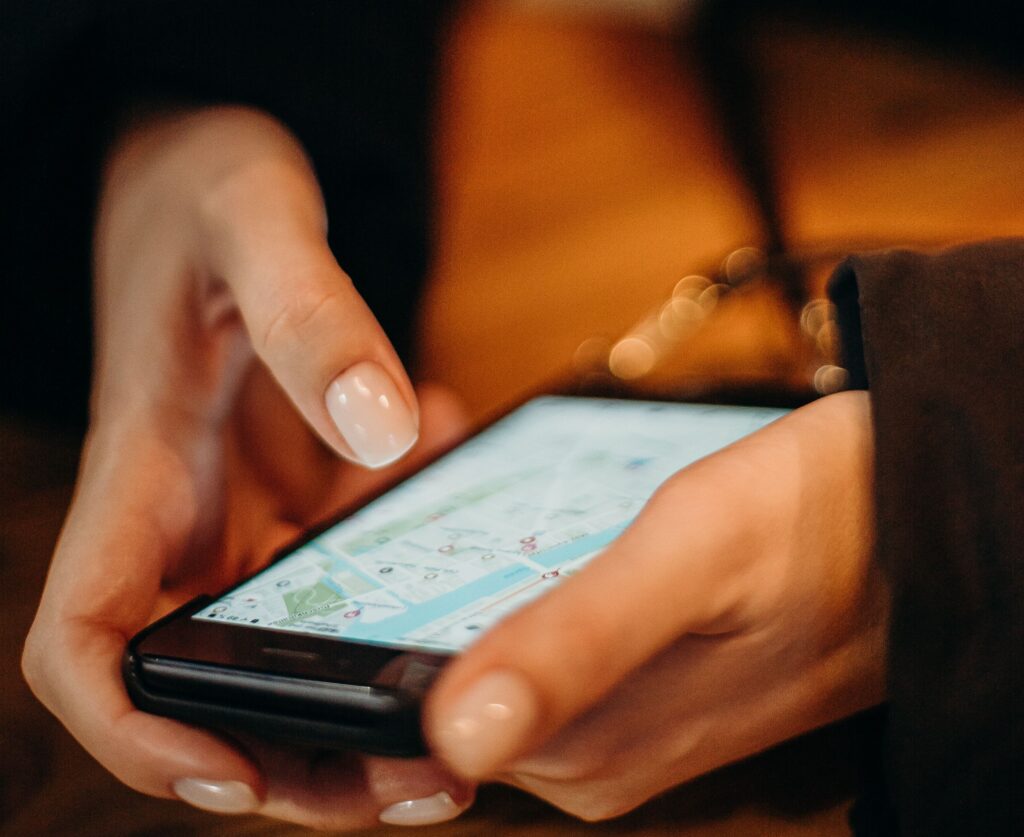
You do not need dozens of apps. Start with a few that support your daily plans.
| Purpose | Apps or services to consider |
|---|---|
| Maps and public transportation routes | NAVER Map or KakaoMap |
| Translation | Papago or Google Translate |
| Taxi requests | Kakao T |
| Messaging and internet calls | KakaoTalk |
| Intercity train reservations | KORAIL’s official booking services |
Set up important accounts before departure. Some services may require a verification message, and dealing with that at home is easier than troubleshooting after a long flight.
Save your hotel’s Korean name and address. Copying that information into a map or showing it to a driver can help avoid confusion.
For setup tips and official links, see Essential Apps You Need for a Trip to Korea.
My Experience With Kakao T
During my March 2025 trip, I used Kakao T frequently and found it convenient.
Entering my destination in the app made taxi trips easier, and I used taxis more often than public transportation.
My experience is one example, though. Check the current account requirements and payment options available to you before relying on the app.
5. Plan Your Airport Transfer
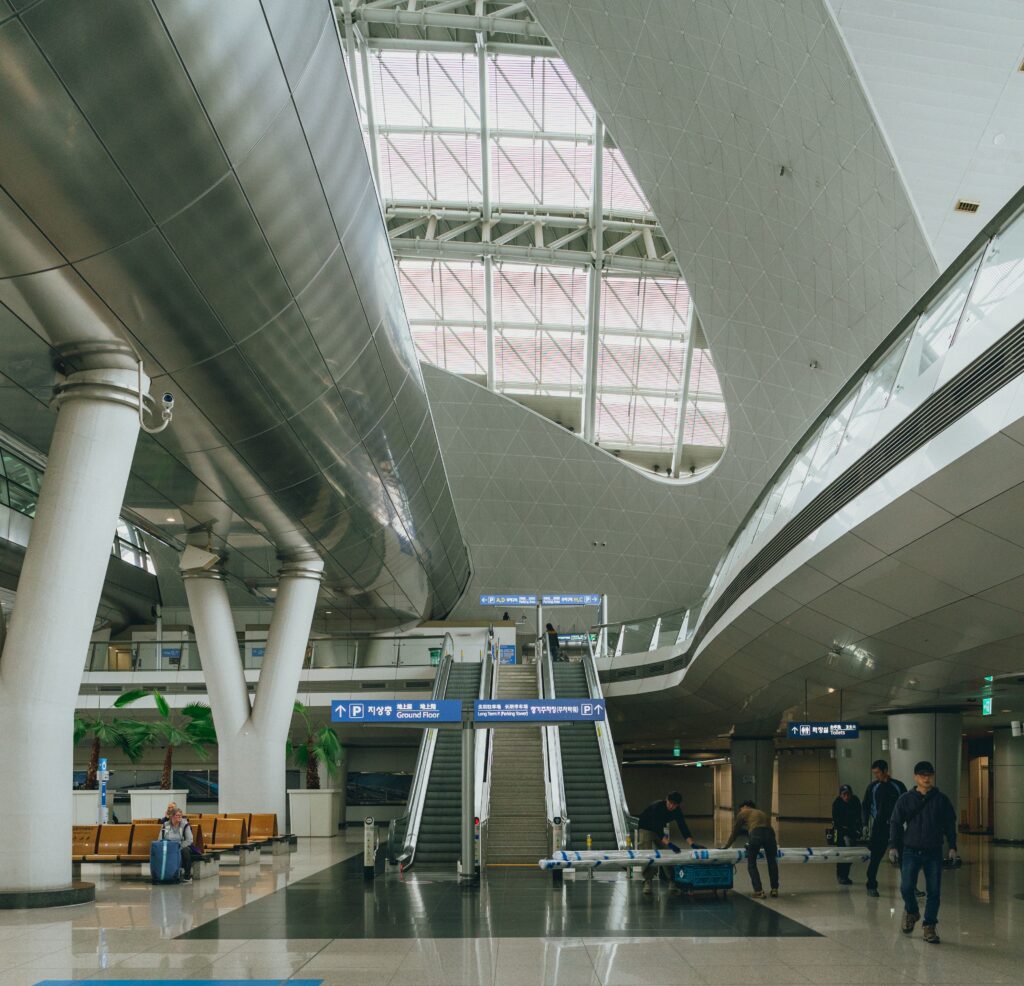
If you arrive at Incheon International Airport, decide how you will reach your accommodation before departure.
The best choice depends on your arrival time, luggage, group size, and hotel location.
Airport Railroad
The airport railroad can be convenient if your accommodation is near a station or you are comfortable making a connection.
Check whether you need the express or all-stop service, and account for the journey from the arrival hall to the station.
Airport Limousine Bus
An airport bus may be convenient when its route stops near your accommodation.
Check the exact stop, operating hours, and walking distance to your hotel. A nearby bus stop can make a big difference when you have luggage.
Taxi
A taxi can simplify the trip when you have several bags, are traveling with family, or arrive when public transportation options are limited.
Use an official taxi stand or an established booking service. Keep the destination address ready in Korean.
For a broader explanation of airport transfers and transportation choices, read Getting Around Korea.
6. Bring Credit Cards and Some Korean Won
You can pay by credit card for many everyday purchases in Korea, but carrying some cash is still useful.
Bring:
- A primary credit card, preferably with no foreign transaction fee
- A backup credit card
- A modest amount of Korean won
- A debit card if you plan to withdraw cash
Cash can help at some market stalls, smaller businesses, and places where your foreign card does not work. It is also useful for recharging a physical transportation card.
When a payment terminal offers a choice between Korean won and your home currency, choosing Korean won is generally a sensible default. Review any conversion offer and your card’s fees.
During my March 2025 trip, I used American Express for most purchases and had few problems. However, it was not accepted in a couple of situations, which is why I recommend a backup credit card.
For cash amounts, ATMs, card fees, and payment tips, read Do I Need Cash in Korea?.
7. Learn the Basics of Local Transportation
A rechargeable transportation card such as T-money makes local bus and subway trips convenient.
You can buy a physical card at many convenience stores and other authorized locations. The price of the card is separate from the balance you add for travel.
Keep Korean won available for recharging it, rather than assuming that a foreign credit card will work at every recharge location.
On the Subway
Tap your card when entering and exiting the station.
Check the line, travel direction, and exit number. Large stations may have several exits, and choosing the right one can save a long walk.
On the Bus
Tap when boarding and again when getting off. Exit tapping matters for fare calculation and eligible transfers.
Use a map app to follow your route so you know when your stop is approaching.
For detailed instructions, read How to Use T-Money in Korea.
Other transportation passes may suit particular itineraries, but you do not need to compare every option before your first ride.
8. Use Separate Tickets for Intercity Trains
If you plan to travel between cities, look into KTX and other intercity train services.
These journeys use separate train tickets. Your everyday T-money balance does not replace an intercity train reservation.
Check:
- The departure and arrival stations
- The date and time
- Whether your ticket includes a reserved seat
- Cancellation conditions
- How you will reach your accommodation after arrival
Book important journeys early when traveling during busy periods, and save your ticket details offline.
For help comparing trains with other options, see Getting Around Korea.
9. Order Food Without Worrying About Perfect Korean
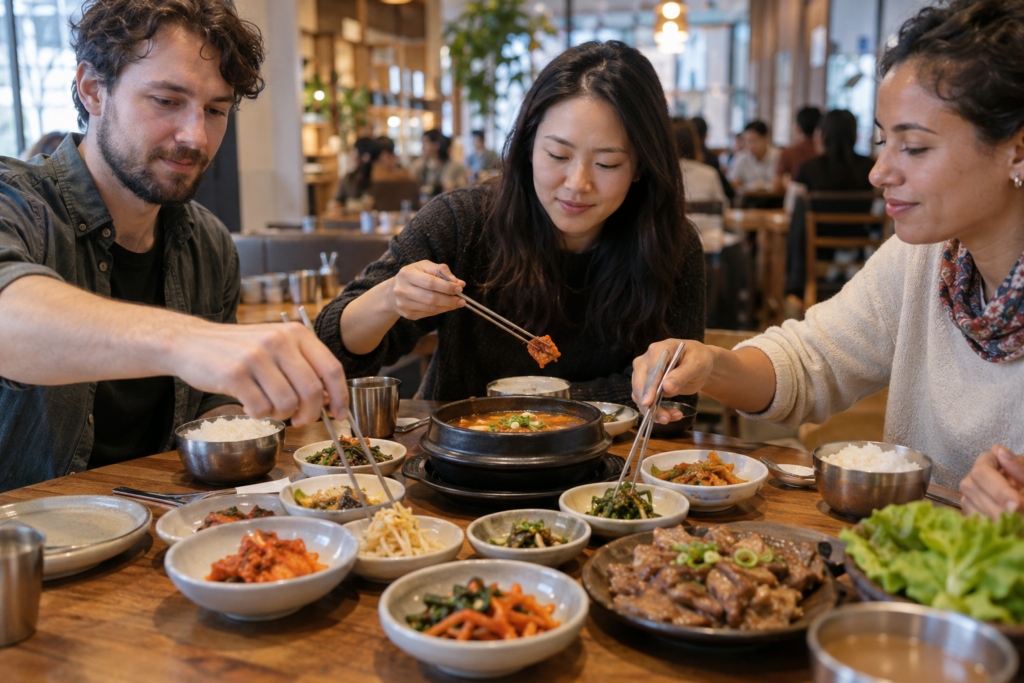
You do not need to speak fluent Korean to enjoy local restaurants.
Photo menus, pointing, and a translation app can help. A useful phrase is:
“Igeo juseyo” — “This one, please.”
Some restaurants take orders through staff, while others use kiosks, table tablets, or QR codes. Look for a language option before starting.
You may also notice:
- Small side dishes served with the meal
- Water or extra side dishes available from a self-service area
- Spoon and chopstick drawers under the table
- A call button for requesting assistance
- Payment at the counter after eating
Check portion information before ordering, particularly when a menu lists a minimum number of servings.
For practical examples, read How to Order Food in Korea When You Don’t Speak Korean.
If you have a serious food allergy, prepare a clearly translated explanation and confirm ingredients with staff. Menu photographs alone cannot tell you everything in a dish.
What Is Kimchi? — Get to know Korea’s famous fermented vegetables and the different varieties you may encounter.
Is Korean Food Spicy? — Discover both spicy and mild dishes to find meals that suit your taste.
What Is Banchan? Are Side Dishes Free in Korea? — Learn about the small side dishes served with Korean meals and how refills usually work.
10. Understand Tipping and Everyday Etiquette
Tipping is not normally expected at everyday Korean restaurants and cafés. You generally pay the stated amount.
For more detail, read Do You Tip in Korea?.
A few everyday habits also help:
- Keep your voice considerate on public transportation.
- Wait for passengers to exit before boarding.
- Follow posted rules at attractions and businesses.
- Remove your shoes when a home or venue requires it.
- Use a polite greeting and say thank you.
You do not need to master every custom. Paying attention to the setting and following clear instructions will take you a long way.
11. Use Convenience Stores for Everyday Needs
Convenience stores are useful for drinks, snacks, simple meals, toiletries, and small travel necessities.
Many also sell transportation cards.
Some locations operate around the clock, but opening hours vary. Check the specific branch if you need something late at night.
For more about what to expect, read Are Convenience Stores Open 24 Hours in Korea?.
12. Leave Room for Shopping
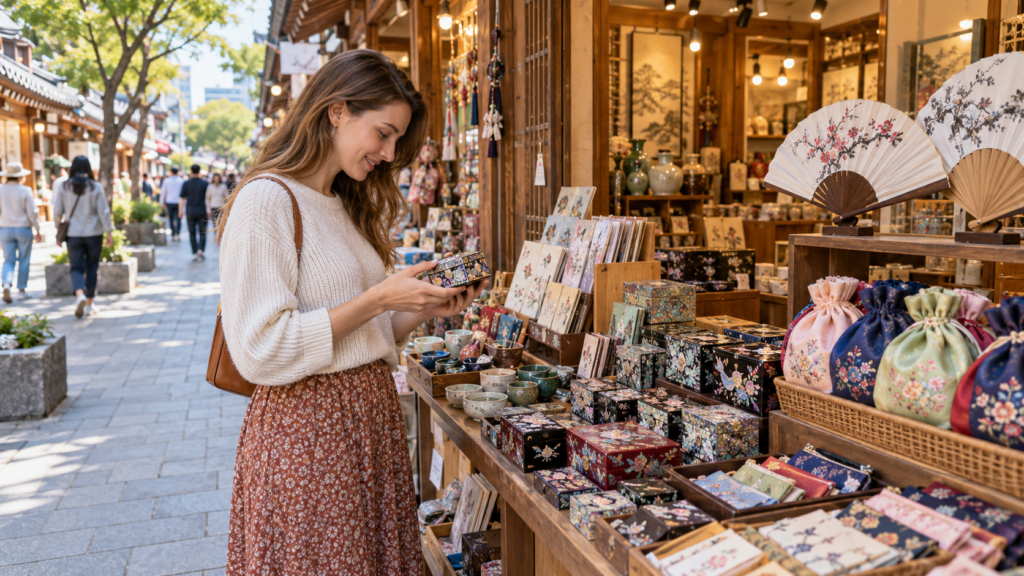
Korea offers plenty of shopping opportunities, from skincare and stationery to food gifts and locally made souvenirs.
Before buying, compare sizes, bundle contents, and how much space you have in your luggage.
For beauty shopping, start with What to Buy at Olive Young in Korea.
For other gift ideas, see Best Souvenirs to Buy in Korea.
Tourist Tax Refunds
Some purchases by eligible visitors qualify for a tourist tax refund.
Look for participating-store signs, bring your passport, and ask about the process before paying. Keep your receipts and check any conditions about taking the goods out of Korea.
A tax refund is not available on every purchase, and the process can differ by store.
13. Check Your Chargers and Plug Adapter
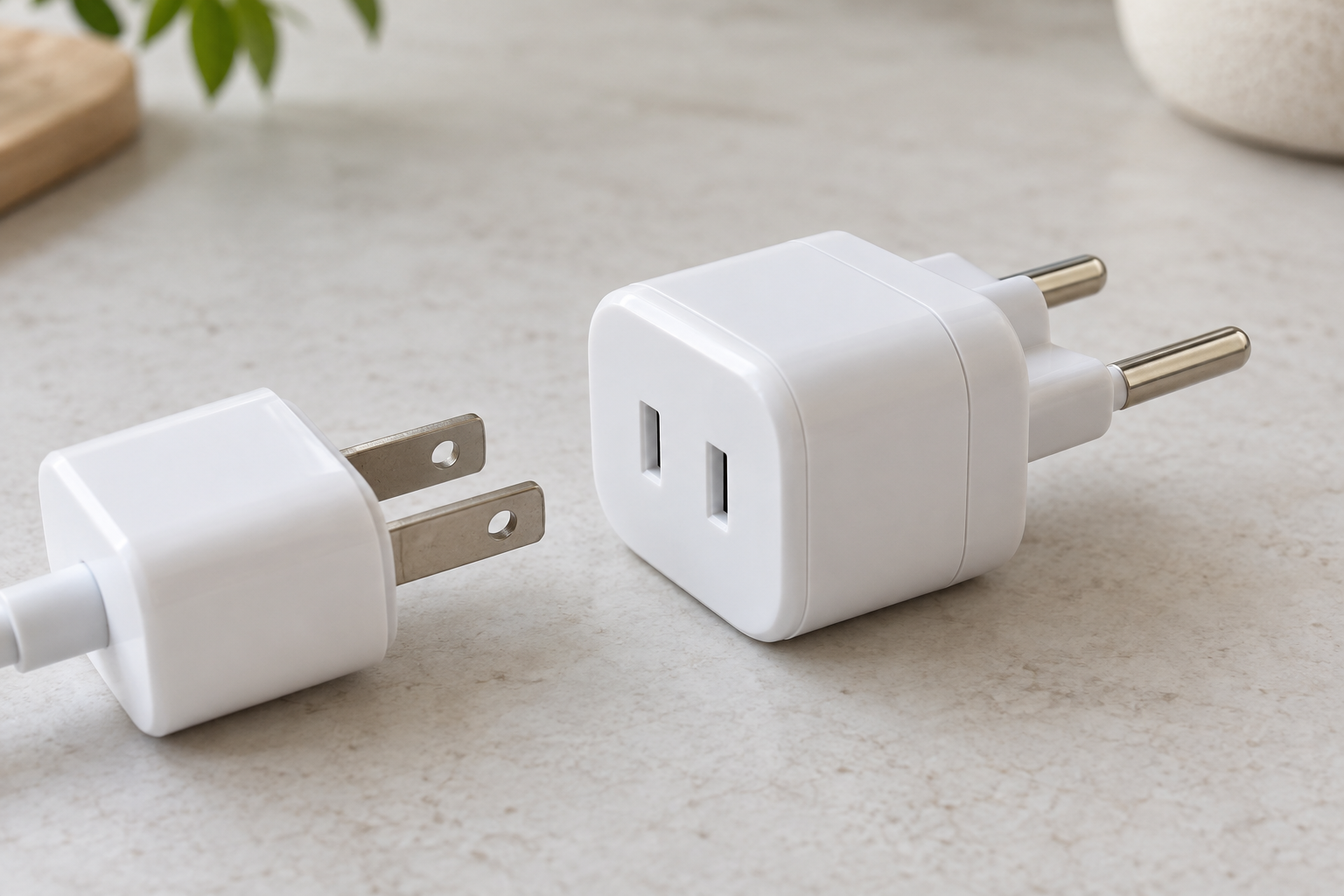
A U.S.-to-Korea plug adapter is commonly called a “dwaejiko” (돼지코), meaning “pig’s nose,” because of its shape. It connects American plugs to Korean outlets.
South Korea uses 220V electricity at 60Hz, and common outlets have two round holes.
Check the input rating on each charger or device.
If it says 100–240V, it is generally designed to work with Korea’s voltage, although you may need a compatible plug adapter.
A plug adapter changes the plug shape. It does not convert voltage.
Pay particular attention to appliances such as hair dryers and styling tools. Do not assume they have the same voltage compatibility as your phone charger.
You can buy a U.S.-to-Korea plug adapter online or at local hardware and electrical supply stores in Korea. Look for one with two round pins that accepts U.S. plugs.
14. Know a Few Restroom Basics
You can find restrooms at many stations, shopping centers, attractions, and other public facilities.
Check posted instructions, especially in older buildings. In most modern Korean restrooms, regular toilet paper can be flushed unless a sign says otherwise.
Wet wipes and sanitary products belong in the appropriate bins.
For signs and common questions, read Can You Flush Toilet Paper in Korea?.
Carrying a small pack of tissues can also be useful during a day out.
15. Save Help and Emergency Information
Save your accommodation’s Korean address and contact details before exploring.
The official VISITKOREA website provides travel information about destinations, transportation, shopping, and practical questions.
For tourism information and interpretation assistance, check the 1330 Korea Travel Helpline.
For emergencies in Korea:
- 112: Police
- 119: Fire, rescue, and ambulance services
Keep your phone charged, take normal care of valuables, and plan your return transportation when going out late.
16. Explore Seoul’s Must-Do Experiences
From royal palaces and traditional markets to Korean barbecue and scenic city views, Seoul has plenty to enjoy on your first visit. Find inspiration in our 10 Must-Do Things in Seoul, Korea.
A Simple Plan for Your Arrival Day
Your first day does not need to include a packed sightseeing schedule.
Start with these tasks:
- Connect your phone to Wi-Fi or mobile data.
- Get a small amount of Korean won if needed.
- Take your planned transportation to your accommodation.
- Check in or arrange luggage storage.
- Find a nearby convenience store and an easy meal.
- Confirm the route for your first full day.
Give yourself time to recover from the flight and become familiar with your neighborhood.
First-Time Korea Checklist
Before departure, make sure you have:
- Passport and required entry documents
- Accommodation details saved in English and Korean
- Primary and backup payment cards
- Cash or a plan to get Korean won
- A mobile data or roaming plan
- Navigation and translation apps
- An airport transfer plan
- A compatible plug adapter
- Important reservations saved offline
- Insurance and emergency contact information
- Clothing suitable for the season
You can arrange a transportation card after arrival if you plan to use buses and subways.
Final Thoughts
Your first trip to Korea does not need to be perfectly planned.
Prepare the basics, leave some flexibility, and give yourself time to learn how things work.
A connected phone, more than one payment option, a little Korean won, and a clear airport transfer plan will help you start comfortably.
After that, enjoy the food, explore different neighborhoods, and make room for the places you discover along the way.