
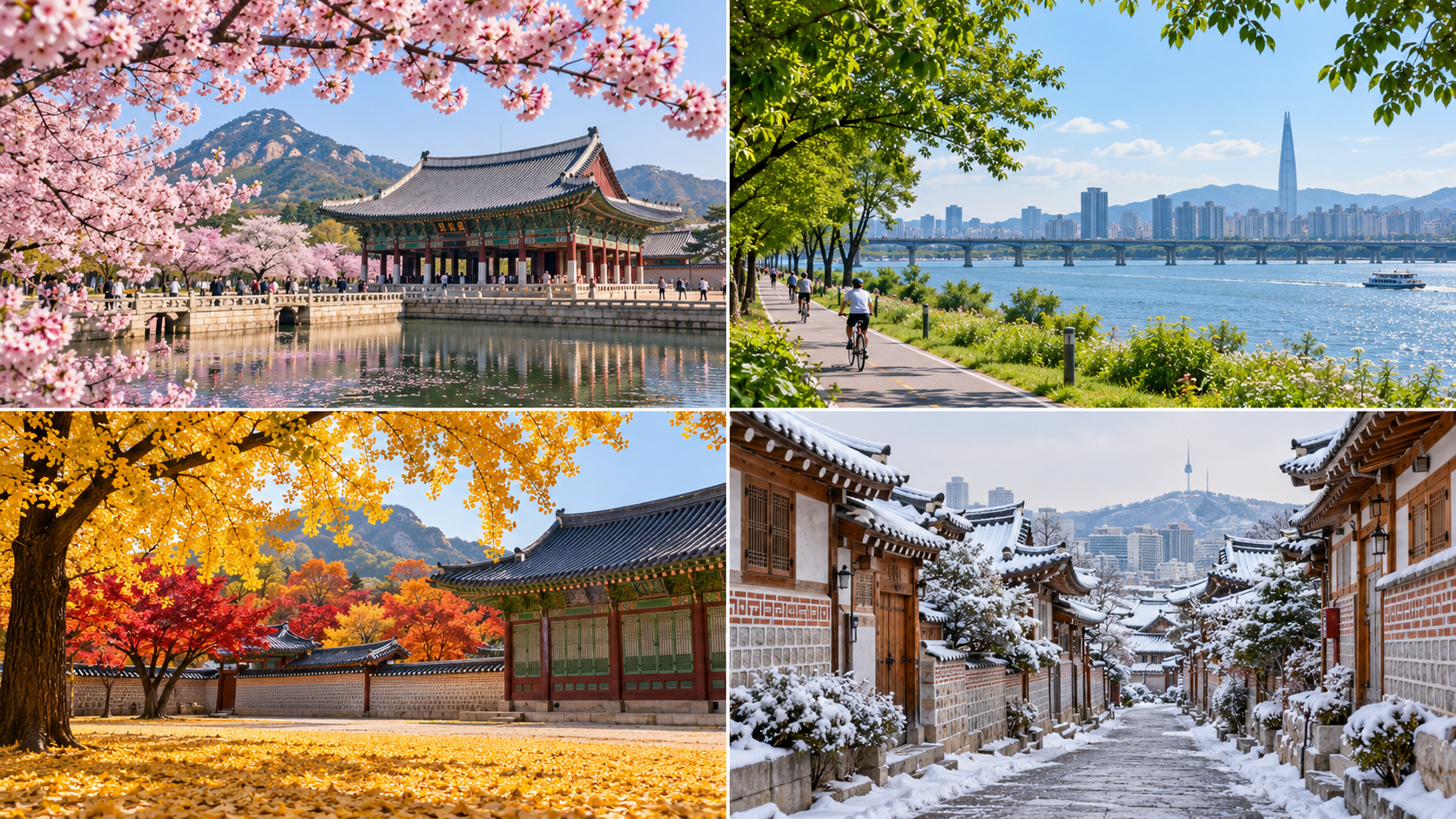
The best time to visit South Korea depends on the kind of trip you want. Spring and fall are generally the easiest seasons for walking around cities and spending time outdoors. Summer brings lush scenery and long, lively days, but also heat, humidity, and rain. Winter can be very cold, yet it offers a different side of Korea, from snowy landscapes to warming meals.
If you are planning your first trip, this guide will help you choose a season that fits your plans rather than searching for one “perfect” month.
Spring (March–May)
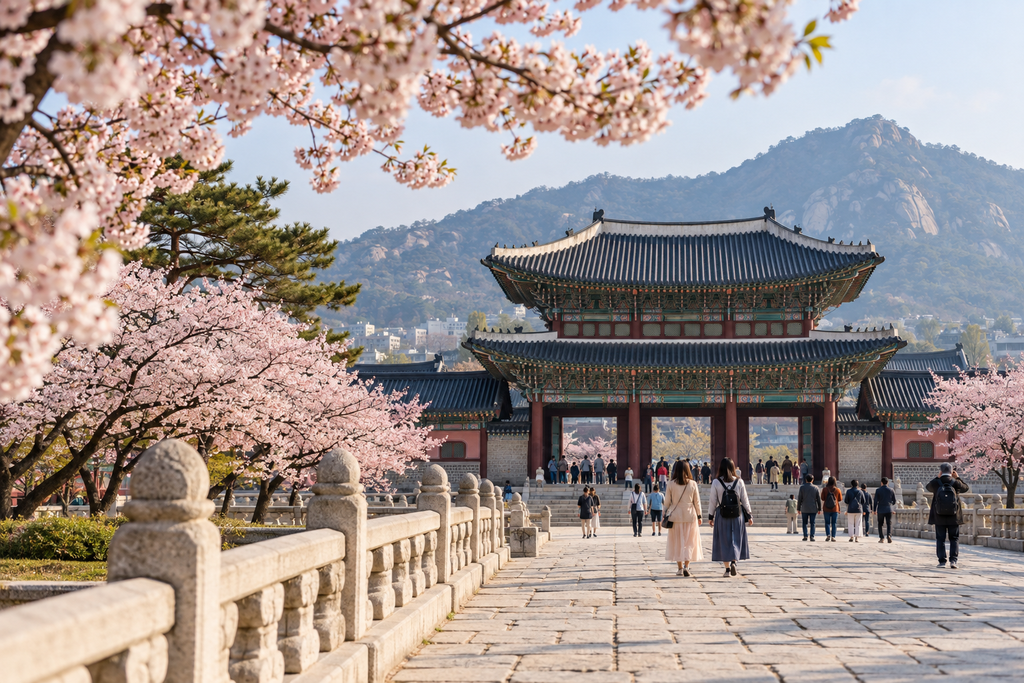
Spring is one of the best seasons for a first trip to Korea. As the weather becomes milder, parks, palace grounds, and city streets fill with flowers. It is a comfortable time to spend long days walking and sightseeing.
For cherry blossoms, visit Yeouido Hangang Park in Seoul or travel to Jinhae, one of Korea’s best-known blossom destinations. Gyeongju is another lovely spring stop: you can explore historic sites and enjoy the changing scenery in the same trip. If you have more time, Jeju offers spring flowers and coastal views. Try a palace walk, a picnic by the Han River, or a day trip planned around the blossoms.
The advantages: Pleasant walking weather and beautiful flowers make spring especially appealing for first-time visitors.
Keep in mind: Cherry blossoms last only a short time, and their timing changes each year. Popular viewing spots can be crowded, so check the bloom forecast before booking a trip around them.
Summer (June–August)
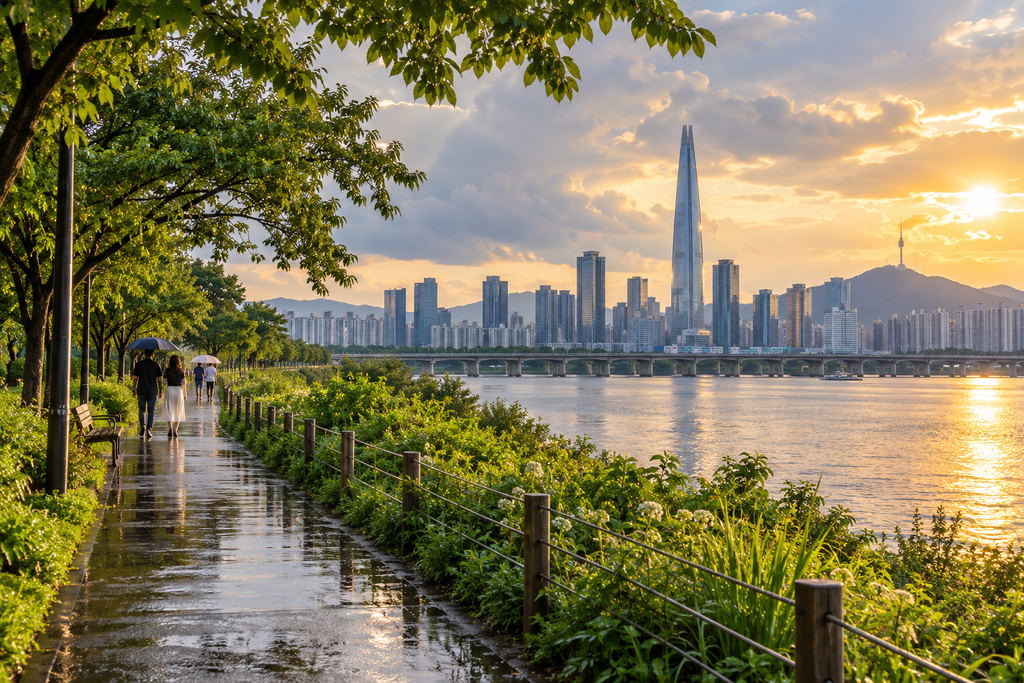
Summer brings beach trips, festivals, and lively evenings, but it can also be very hot and humid. July and August can feel uncomfortable when you are walking outdoors for hours. If you have trouble tolerating heat, I would not recommend summer as your first choice for visiting Korea.
The rainy season, called jangma, generally begins in late June and extends into July, although its timing varies from year to year. Heavy rain can affect plans in August as well. Check the forecast and leave some flexibility for outdoor activities.
If you enjoy the water, visit Haeundae Beach in Busan or Daecheon Beach in Boryeong. The Boryeong Mud Festival is a distinctive summer experience if its dates match your trip. In Seoul, enjoy riverside areas in the evening and save museums, shopping, and cafés for the hottest or rainiest hours.
The advantages: Beaches, summer festivals, and long, lively evenings give you plenty to do.
Keep in mind: Heat, humidity, and heavy rain can make a tightly scheduled sightseeing trip tiring. Carry water and an umbrella, and build indoor breaks into each day.
Fall (September–November)
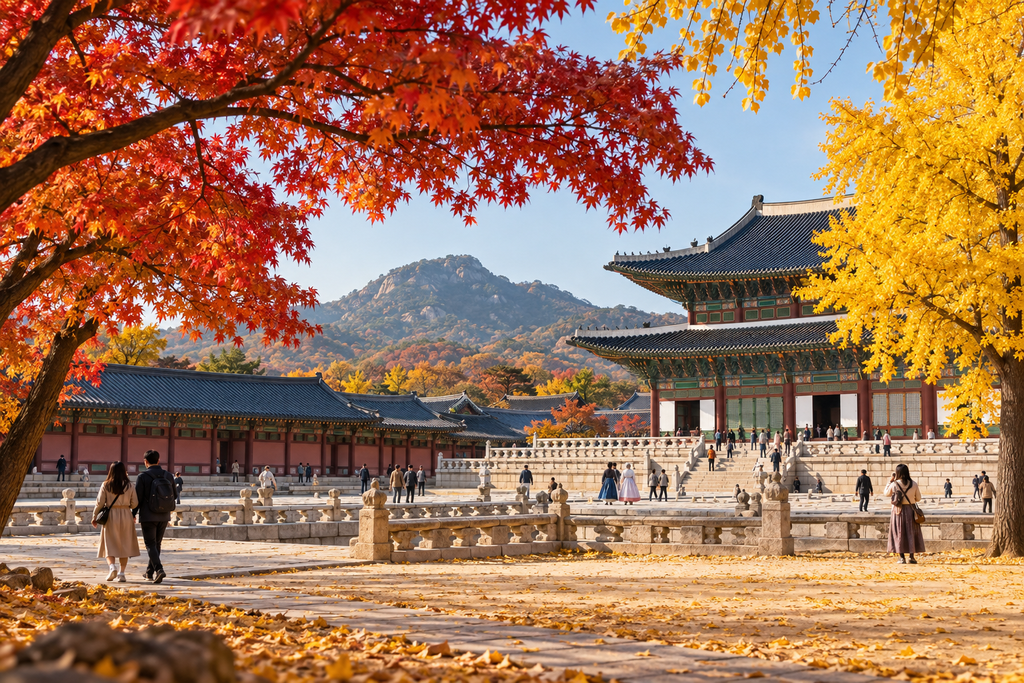
Fall is an excellent season for sightseeing, particularly if you want to explore Korea on foot. After the summer heat eases, the air becomes cooler and the trees gradually turn red, orange, and gold. For many first-time visitors, October and early November offer a good balance of comfortable weather and autumn scenery.
Visit Seoraksan National Park for mountain views or Naejangsan National Park for its famous fall foliage. If you prefer a city trip, walk through Seoul’s palace grounds and parks, then take a day trip to a nearby scenic area. Gyeongju is also a good choice for combining historic sites with an autumn walk.
The advantages: Cooler weather makes walking, hiking, and outdoor sightseeing more enjoyable. Fall foliage adds another reason to explore beyond Seoul.
Keep in mind: The best foliage dates vary by year and location. Popular trails and viewing spots can be busy during peak color, so check the current foliage forecast and book transportation early if you plan a weekend trip.
Winter (December–February)
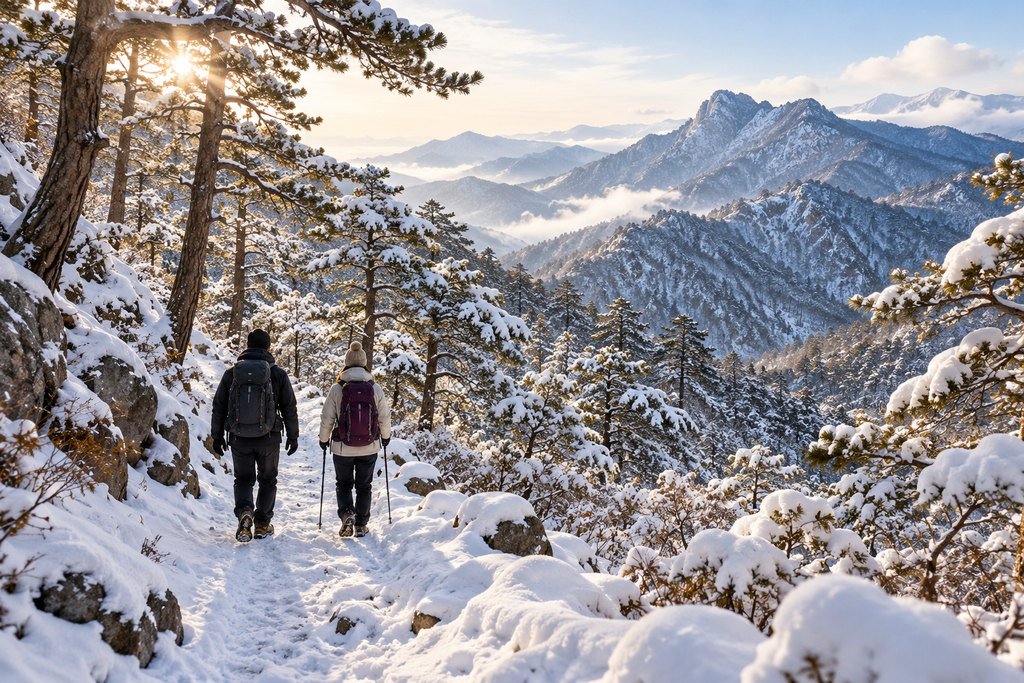
Winter in Korea can be much colder than many visitors expect. Temperatures can fall below freezing, and the wind can make a day of outdoor sightseeing feel even colder. If you are sensitive to cold, winter may not be the most comfortable season for your first visit.
Winter is a rewarding choice, though, if you want seasonal activities. Visit Pyeongchang for skiing or snowboarding, or plan a trip to Gangwon Province for mountain scenery. In Seoul, combine shorter outdoor walks with museums, markets, cafés, and warming meals such as hot soups. Seasonal winter festivals can also be fun, but check their dates and conditions before you travel.
The advantages: Skiing, winter scenery, and seasonal food offer experiences you cannot get on a warm-weather trip.
Keep in mind: Pack a warm coat, thermal layers, gloves, and shoes with good grip. Snow is not guaranteed in Seoul; if seeing snow matters most to you, plan for a mountain destination and check conditions before leaving.
Which Season Should First-Time Visitors Choose?
For a first trip centered on Seoul sightseeing, walking, and day trips, I would start by looking at April–May or October–early November. These periods often offer more comfortable conditions for spending much of the day outside. They are popular for good reason, so reserve important accommodations and activities ahead of time.
If your travel dates are fixed, do not worry. Korea is worth visiting in every season. The key is to match your daily plans to the weather:
- Spring: Bring layers and check bloom forecasts.
- Summer: Plan breaks from the heat and keep a rainy-day option.
- Fall: Pack layers and check foliage updates.
- Winter: Dress warmly and mix outdoor sightseeing with indoor activities.
Weather and seasonal highlights vary by region and year. Before you leave, check the Korea Meteorological Administration forecast and the VISITKOREA travel website for current conditions and seasonal updates.
Final Thoughts
There is no single best month for everyone to visit Korea. Spring and fall are the easiest starting points for many first-time travelers, while summer and winter reward visitors who plan around their distinctive weather.
Choose the season that matches what you most want to experience, then leave room in your schedule for the unexpected discoveries that often become the best part of a trip.