
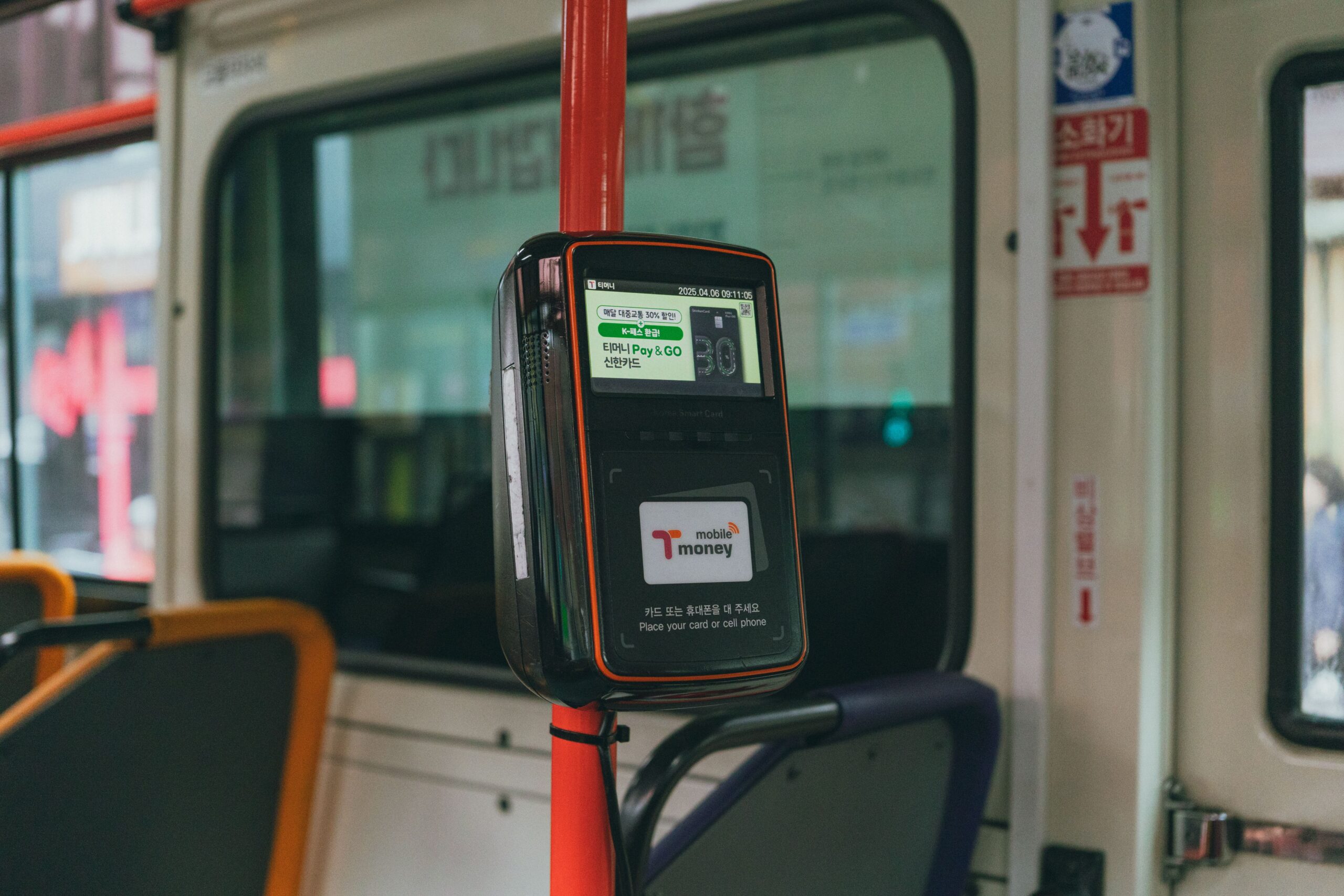
If you’re visiting South Korea for the first time, one of the first things you’ll want to figure out is how to get around.
The good news is that Korea has an excellent public transportation system, and a T-money card makes using it much easier.
T-money is a rechargeable transportation card that you can use on subways, buses, and many taxis throughout Korea. Instead of buying a separate ticket for every ride, you simply load money onto the card and tap it when you travel.
For most American travelers, I recommend getting a T-money card soon after arriving in Korea.
There is one thing that often surprises American visitors, though: even in a country where credit cards are accepted almost everywhere, having some Korean won can still be useful when buying or recharging a physical T-money card.
In this guide, I’ll explain where to buy a T-money card, how much money to load, how to use it on Korean buses and subways, and what iPhone users should know about MobileTmoney.
What Is a T-Money Card?
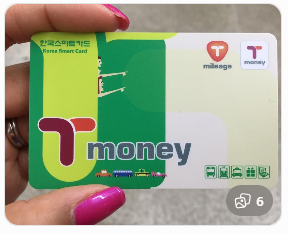
T-money is one of South Korea’s most widely used prepaid transportation cards.
You can use it on public transportation in Seoul and many other parts of Korea, including:
- Subways
- City buses
- Many taxis
- Other participating transportation services
T-money can also be used at participating convenience stores and other businesses that display the T-money logo.
For travelers, its biggest advantage is convenience. You don’t have to buy a new ticket every time you take the subway or bus, and eligible transfers between buses and subways can also receive discounted transfer fares.
Where Can You Buy a T-Money Card?
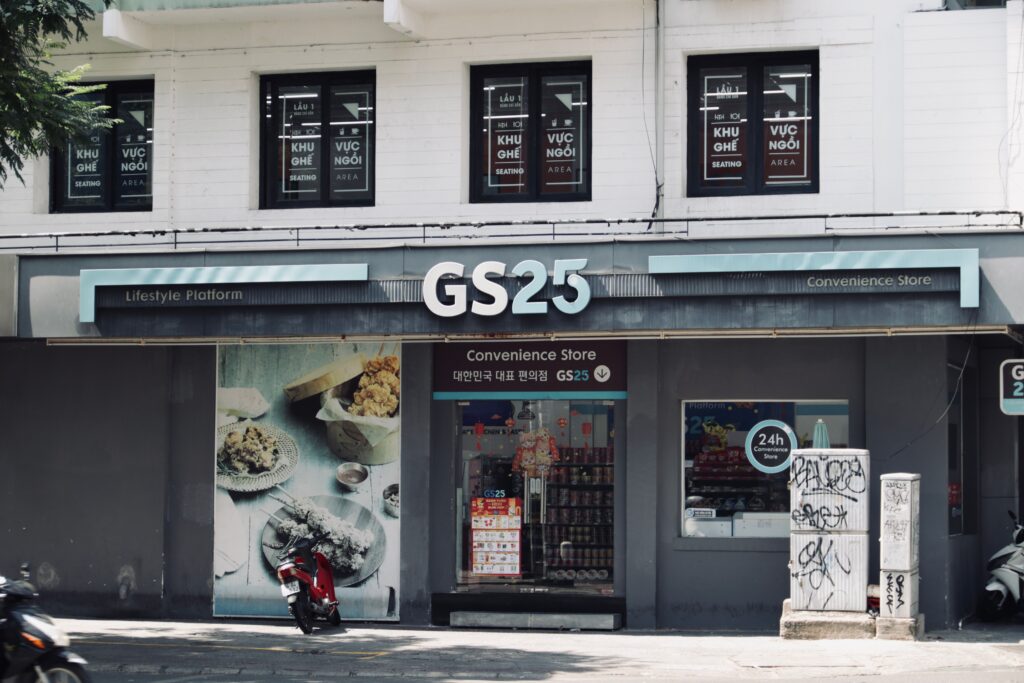
For most travelers, the easiest place to buy a T-money card is a convenience store.
Look for major Korean convenience-store chains such as CU, GS25, and 7-Eleven. T-money cards are also available at designated subway information centers and other authorized locations.
A basic physical T-money card generally costs around ₩3,000 to ₩5,000 (about $2-$4), depending on the card and design.
Keep in mind that this is only the price of the card itself. You’ll need to add money before you can use it for transportation.
Can You Buy T-Money at Incheon Airport?
Yes. If you’re arriving at Incheon International Airport, you can get a transportation card after you arrive.
This is convenient because you can have your card ready before taking public transportation into Seoul.
But don’t worry if you don’t buy one at the airport. T-money cards are easy to find at convenience stores once you reach Seoul.
Do You Need Cash to Recharge a Physical T-Money Card?
This is especially important for American travelers.
South Korea is extremely credit-card friendly, but you shouldn’t assume that your U.S. credit card can be used to recharge a physical T-money card wherever you go.
I recommend keeping some Korean won in cash available for buying or recharging your physical transportation card.
You don’t need to carry a large amount of cash. Most hotels, restaurants, cafés, department stores, and shops accept credit cards. But transportation is one of the reasons having a small amount of Korean won can still be useful.
Related Guide: Do I Need Cash in Korea?
How Much Money Should You Put on Your T-Money Card?
You don’t need to load a large amount when you first buy the card.
For many visitors, starting with around ₩20,000 to ₩30,000 (about $14-$22) per person is a practical amount.
Use the card for a few days and recharge it when the balance gets low.
This is usually better than putting a large amount on the card at the beginning of your trip because you won’t have to worry as much about getting unused money refunded before you leave Korea.
How to Use T-Money on the Subway
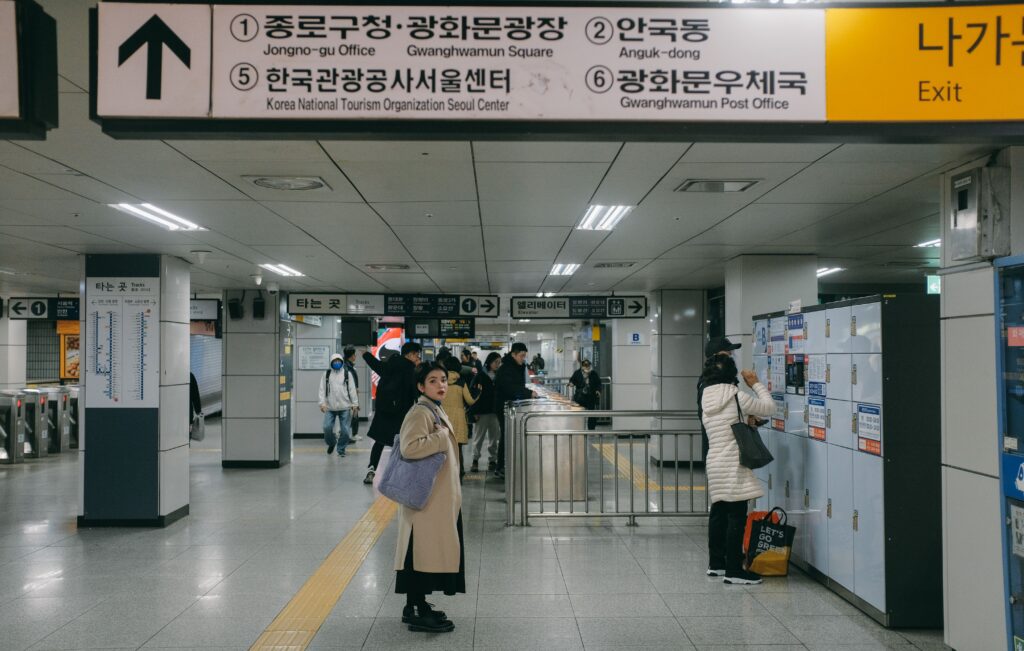
Using T-money on the Korean subway is easy.
When entering the station, simply tap your T-money card on the reader at the turnstile and walk through.
When you arrive at your destination, tap the card again when you exit.
The system automatically calculates the fare based on your trip.
How to Use T-Money on a Bus
When you get on a Korean city bus, tap your T-money card on the reader near the entrance.
Here’s something American travelers should remember:
Tap your card again when you get off the bus.
Tapping when you exit is important for calculating the correct fare and receiving eligible transfer discounts if you continue your trip on another bus or subway.
A simple rule to remember is:
Tap when you get on. Tap when you get off.
Can You Use T-Money Outside Seoul?
Yes.
T-money isn’t only for Seoul. It can be used on compatible public transportation systems in many parts of South Korea.
That’s one of the reasons I prefer T-money for first-time visitors who plan to travel beyond Seoul.
You generally don’t need to buy a completely different transportation card every time you visit another Korean city.
Can You Use T-Money on an iPhone?
Yes — and this is a relatively recent change.
T-money is now available on compatible iPhones and Apple Watches, and MobileTmoney has become a much more practical option for international visitors.
However, there is an important distinction for American travelers.
Adding money directly through Apple Wallet and adding money through the MobileTmoney app are not necessarily the same process.
MobileTmoney currently provides a foreigner option and supports certain overseas-issued cards for top-ups, including Mastercard and American Express, along with some other international card networks.
However, Visa is currently not supported through this foreign-card top-up method.
So if you’re traveling from the United States and your only card is Visa, I would not rely entirely on MobileTmoney.
Physical T-Money or MobileTmoney?
For most first-time American visitors, I still recommend a physical T-money card.
It’s simple. Buy the card, add Korean won, and start using it.
If you have a compatible iPhone and an eligible Mastercard or American Express card, MobileTmoney can also be a very convenient option.
Here’s the easiest way to decide:
Want the simplest option?
Get a physical T-money card.
Have an iPhone and an eligible Mastercard or Amex?
Consider MobileTmoney.
Only have a U.S. Visa?
A physical T-money card is the safer choice.
T-Money vs. WOWPASS vs. Climate Card
T-money is the simplest option for travelers who want a transportation card that works in Seoul and many other parts of Korea.
WOWPASS combines a prepaid Korean payment card, currency exchange, and T-money transportation functionality. Keep in mind that the WOWPASS payment balance and T-money transportation balance are separate.
The Climate Card Short-Term Pass may be a good option if you plan to stay mainly in Seoul and use eligible buses and subways frequently. Because Climate Card rules and coverage can change, check the official information before purchasing.
For most first-time visitors traveling beyond Seoul, I recommend T-money for its simplicity and flexibility.
Korea Tourism Organization transportation card guide
Can You Get Your Remaining Balance Back?
Yes. Small remaining balances on a physical T-money card can generally be refunded at participating convenience stores, although a service fee may apply. Refunds of more than ₩50,000 must be handled at a designated T-money service location.
The original purchase price of the card itself is generally not refundable. For most travelers, the easiest option is to load modest amounts and use most of the remaining balance before leaving Korea.
My Recommendation for American Travelers
If this is your first trip to Korea, don’t overcomplicate transportation.
Buy a physical T-money card after you arrive, add a modest amount of Korean won, and use it for buses and subways.
Keep a little Korean cash available for recharging your card and other situations where using a foreign credit card may not be convenient.
If you’re an iPhone user with a compatible Mastercard or American Express card, MobileTmoney is now worth considering too.
Once you’ve used T-money a couple of times, Korea’s subway and bus system becomes surprisingly easy to navigate.
Quick T-Money Tips for Americans
- Buy your card at a convenience store, airport location, or authorized transportation location.
- Expect a basic physical card to cost around ₩3,000–₩5,000 (about $2-$4) before adding transportation money.
- Consider starting with ₩20,000–₩30,000 (about $14-$22) rather than loading a large amount.
- Keep some Korean won available for recharging a physical card.
- Tap when entering and exiting the subway.
- On buses, tap when you board and when you get off.
- Don’t assume your U.S. Visa will work for MobileTmoney top-ups.
- iPhone users with an eligible Mastercard or Amex may find MobileTmoney convenient.
T-money is one of those small things that can make your first trip to Korea much easier. Set it up early in your trip, and you’ll spend less time figuring out tickets and more time enjoying Korea.