

If you visit South Korea, you may notice something surprising: the streets are generally clean, but public trash cans can be difficult to find.
This can be confusing for American travelers, especially when carrying an empty coffee cup, food wrapper, or used tissue. So why are there so few trash cans in Korea—and what should you do with your trash?
Why Did Korea Remove So Many Public Trash Cans?
One major reason goes back to 1995, when South Korea introduced a volume-based waste disposal system.
Under this system, households and businesses must buy designated garbage bags to dispose of general waste. The goal was to reduce waste and encourage recycling.
However, some people began putting household and business trash into public trash cans to avoid purchasing the required bags. This created overflowing bins, illegal dumping, bad smells, and additional cleanup costs.
To discourage this behavior, many local governments removed public trash cans from streets. In Seoul, the number of street trash cans dropped significantly after the new waste system was introduced.
Maintenance costs and complaints from nearby residents and businesses also contributed to the decrease.
Are Trash Cans Coming Back?
Yes, at least in some areas.
As tourism and the use of takeout cups increased, both residents and visitors complained that there were not enough places to dispose of trash. Seoul has responded by adding more street trash cans, particularly in busy areas, near bus stops, and around popular tourist destinations.
However, the number and location of public trash cans can still vary considerably by neighborhood. You may find several in a busy tourist district but none while walking through a residential area.
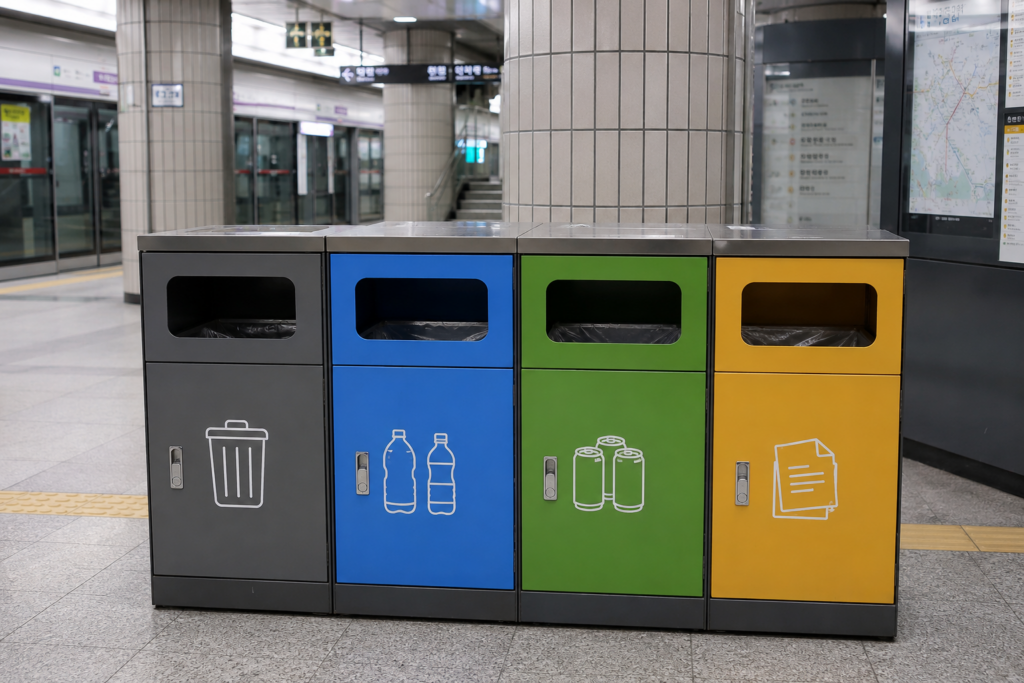
Where Can Travelers Throw Away Trash?
If you cannot find a trash can on the street, try looking in:
- Subway stations
- Shopping malls and department stores
- Airports and train stations
- Tourist attractions
- Highway rest areas
- Cafés or fast-food restaurants where you made a purchase
- Your hotel or other accommodation
Some convenience stores have trash and recycling bins, but not all of them do. If you purchased the item there, you can politely ask an employee where to dispose of it.
Trash cans may also be divided into categories such as general waste, plastic, cans, and bottles. Check the pictures or labels before throwing something away.
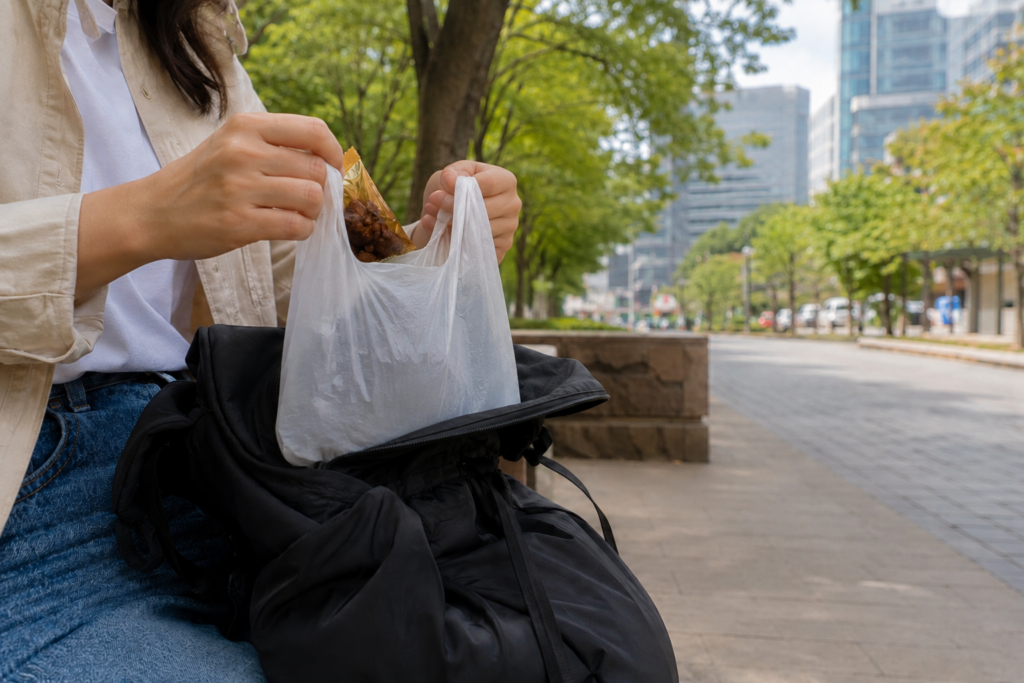
A Simple Tip: Carry a Small Plastic Bag
Many Koreans temporarily carry small pieces of trash until they find a proper place to dispose of them.
It is helpful to keep a small plastic or zip-top bag in your backpack or purse. You can use it for tissues, receipts, wrappers, and other small items until you return to your hotel or find a public trash can.
For an empty drink cup, pour out any remaining liquid before placing it in a recycling bin.
Do not leave trash next to a utility pole, on top of a full bin, or beside bags that you see on the street. Those bags may be household or business trash waiting for scheduled collection—not a public disposal area.
The Bottom Line
Korea has relatively few public trash cans partly because of its volume-based waste system and past problems with illegal household and business dumping.
Although cities such as Seoul are gradually installing more bins, travelers should still expect to carry their trash for a while.
Keeping a small bag with you and using the proper bins at stations, shopping centers, restaurants, or your hotel will make traveling in Korea much easier—and help keep the streets clean.
Related Guide: First Time in Korea Guide