
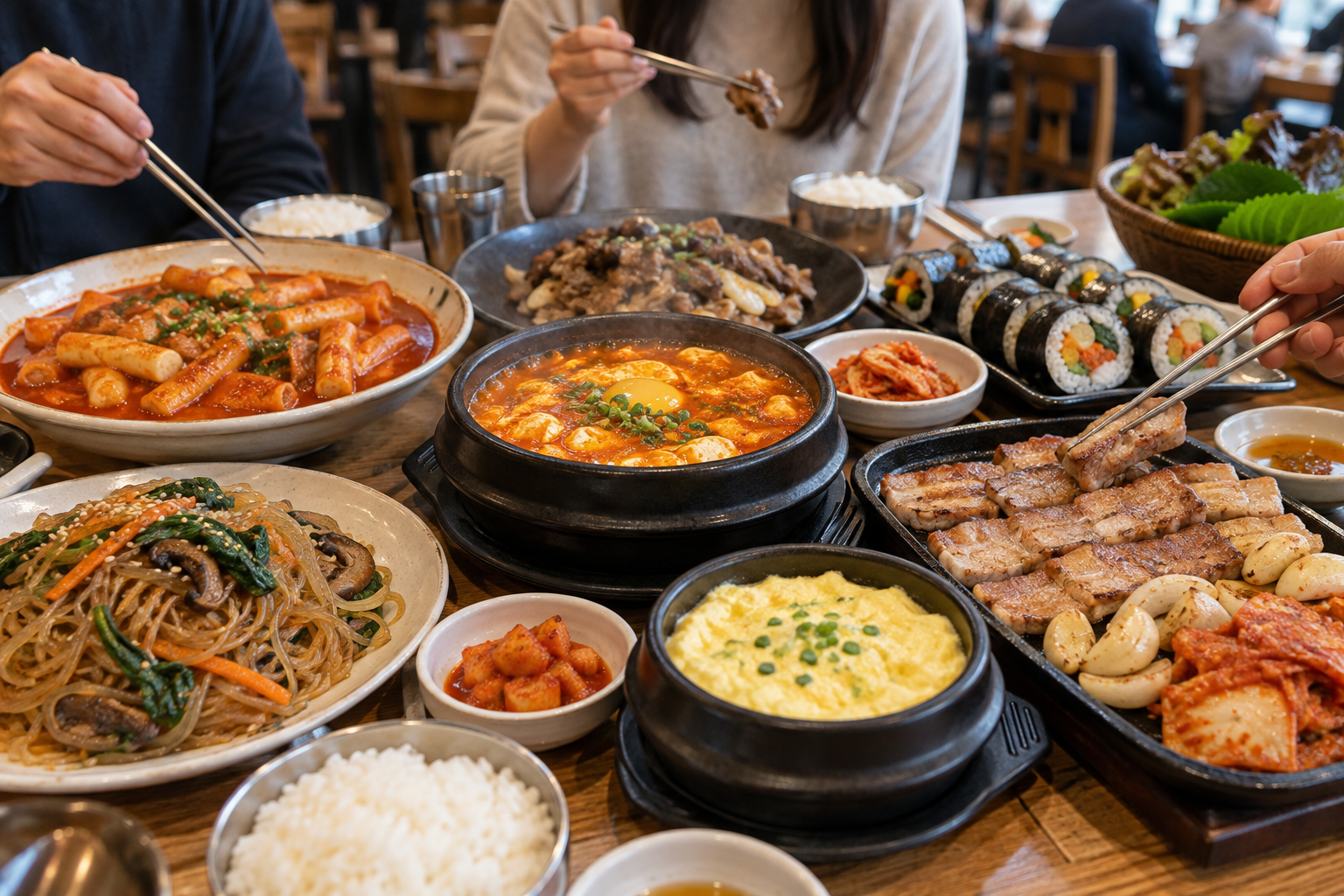
Korean food is often associated with bright red sauces, chili peppers, and spicy dishes. If you do not tolerate spicy food well, you may wonder whether you will have difficulty finding something to eat during a trip to South Korea.
The good news is that not all Korean food is spicy. Some dishes are extremely hot, but many popular Korean meals are mild, savory, sweet, or lightly seasoned.
Understanding which dishes are spicy—and which ones are not—will make ordering food in Korea much easier.
Is All Korean Food Spicy?
No. Korean cuisine includes a wide range of flavors, and many traditional dishes contain little or no chili.
Spiciness became more prominent in Korean cooking after chili peppers were introduced to Korea centuries ago. Today, ingredients such as gochugaru and gochujang are widely used, but they are not included in every dish.
Korean food can be:
- Spicy
- Savory
- Sweet
- Salty
- Sour
- Fermented
- Mild and comforting
Even at restaurants known for spicy food, you can often find rice, steamed eggs, soup, or side dishes that help balance the heat.
Why Is Some Korean Food Spicy?
Two common ingredients give many Korean dishes their red color and spicy flavor.
Gochugaru
Gochugaru (고춧가루) is Korean red pepper powder or flakes. It is used in kimchi, soups, stews, side dishes, and marinades.
The level of heat can vary. Some gochugaru is relatively mild and adds color and flavor, while other varieties are noticeably hotter.
Gochujang
Gochujang (고추장) is a fermented red chili paste made with ingredients such as chili powder, rice, fermented soybeans, and salt.
It has a combination of spicy, savory, and slightly sweet flavors. Gochujang is commonly used in bibimbap, tteokbokki, marinades, dipping sauces, and stir-fried dishes.
Because gochujang also contains sweetness and fermented flavor, a dish made with it may look extremely spicy but taste milder than expected. However, appearances can be misleading, so it is still a good idea to ask before ordering.
Popular Spicy Korean Foods
The level of heat varies by restaurant and recipe, but the following dishes are commonly spicy.
Tteokbokki
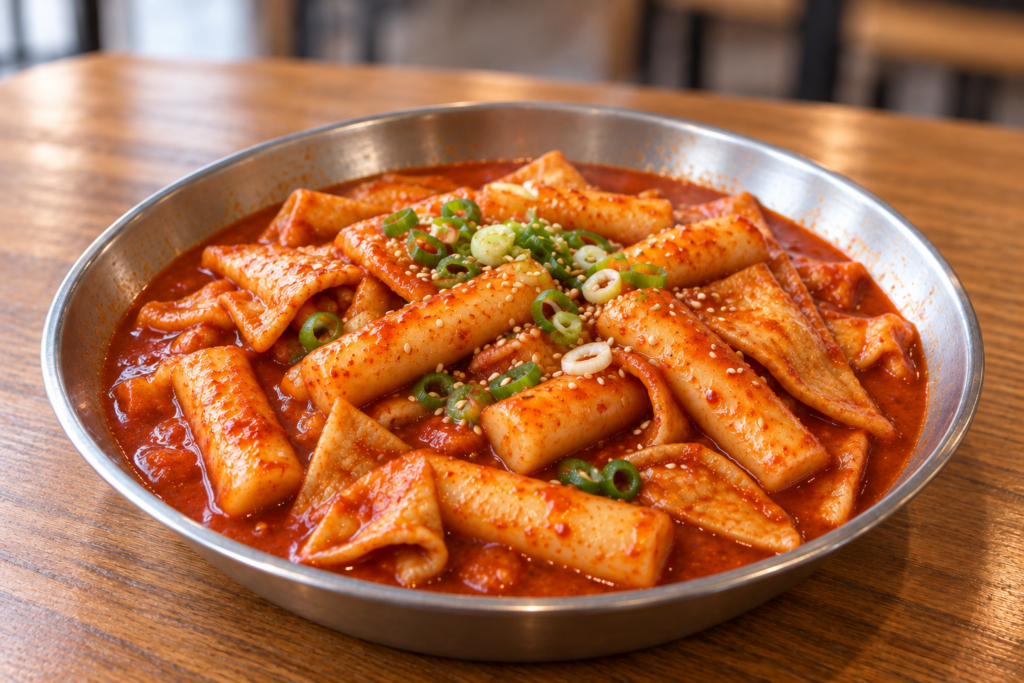
Tteokbokki is made with chewy rice cakes cooked in a thick red sauce. Traditional versions are usually spicy and slightly sweet.
Some restaurants allow you to choose a spice level, but ordinary street-food tteokbokki may already be prepared and cannot be adjusted.
Buldak
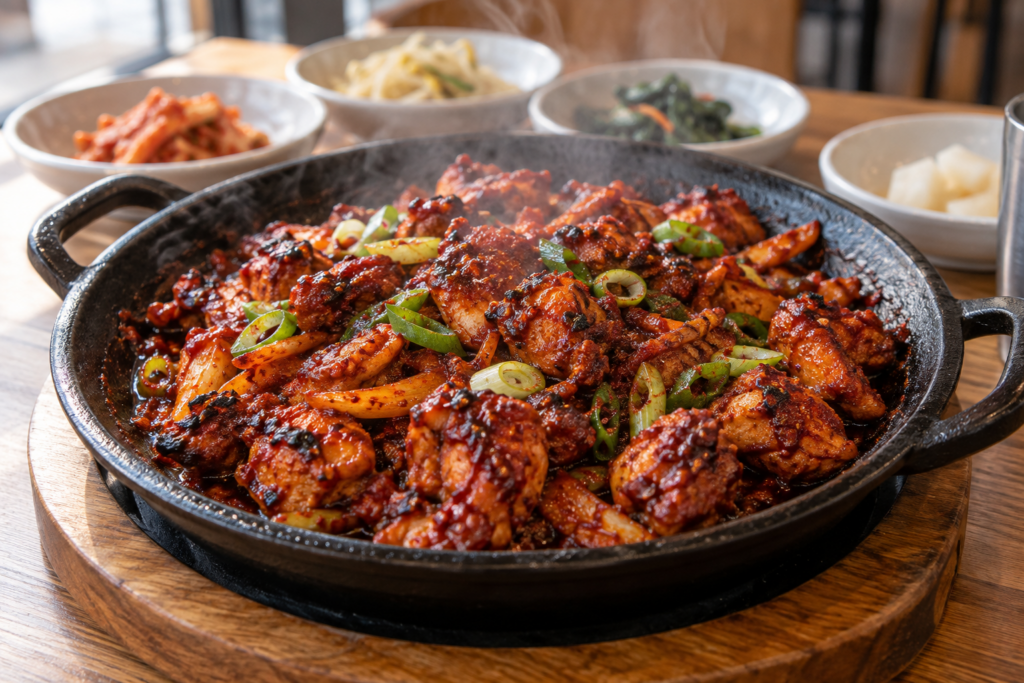
Buldak means “fire chicken.” It is designed to be very spicy and may be difficult for anyone who has a low tolerance for chili.
Buldak ramen and spicy chicken dishes can be considerably hotter than their bright packaging or sweet aroma suggests.
Dakgalbi
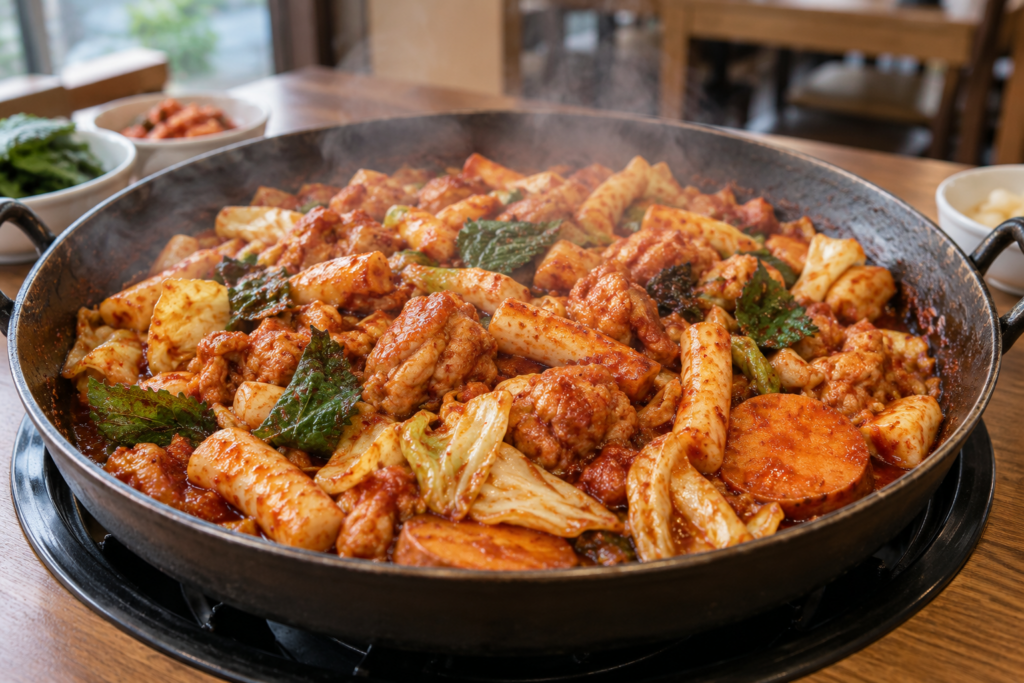
Dakgalbi is stir-fried chicken commonly cooked with cabbage, sweet potatoes, rice cakes, and a spicy red sauce.
Most versions are moderately to very spicy, although some restaurants may offer a mild option.
Jjamppong
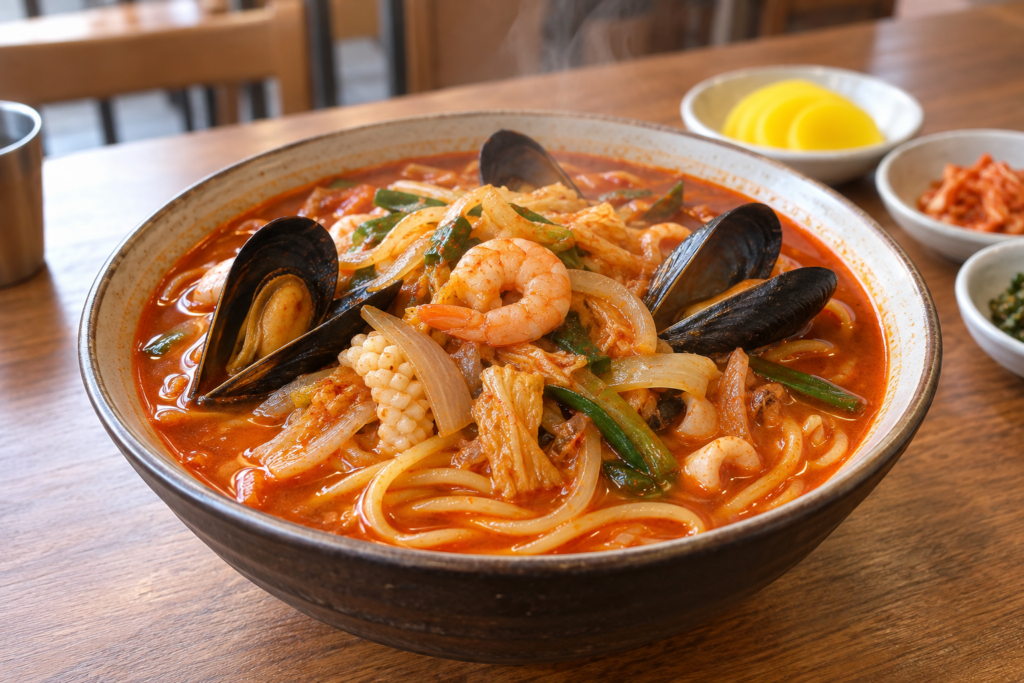
Jjamppong is a spicy Korean-Chinese noodle soup usually prepared with seafood, vegetables, and a red chili broth.
It is generally much spicier than the clear or lightly colored noodle soups served at many other restaurants.
Spicy Stews
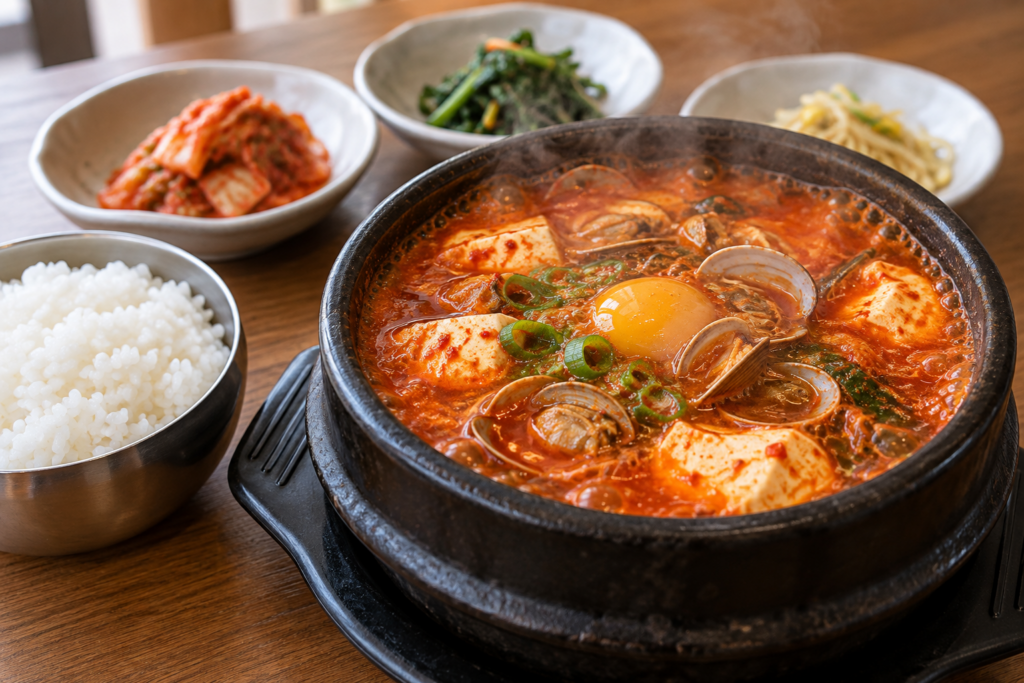
Kimchi jjigae, sundubu jjigae, and other red-colored stews often contain chili powder or chili paste. Their heat levels can vary significantly.
A stew that tastes moderately spicy to a Korean diner may still feel very hot to someone who rarely eats spicy food.
Popular Korean Foods That Are Not Spicy
Travelers who avoid spicy food still have many choices.
Bulgogi
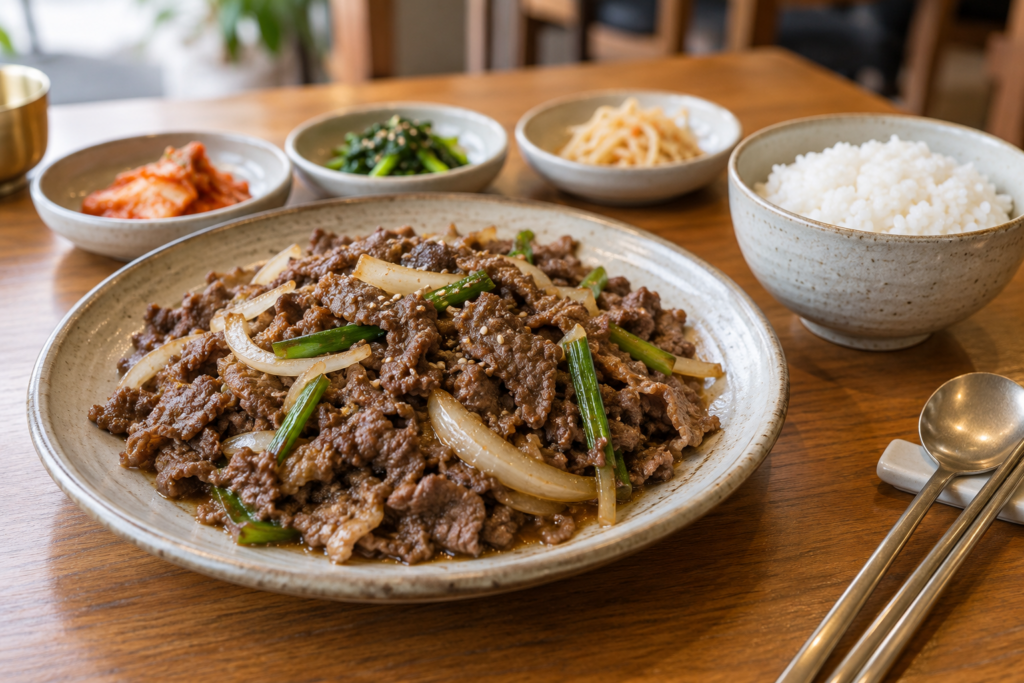
Bulgogi is thinly sliced beef marinated in a sweet and savory soy-based sauce. It is normally mild and is one of the most approachable Korean dishes for first-time visitors.
Galbi
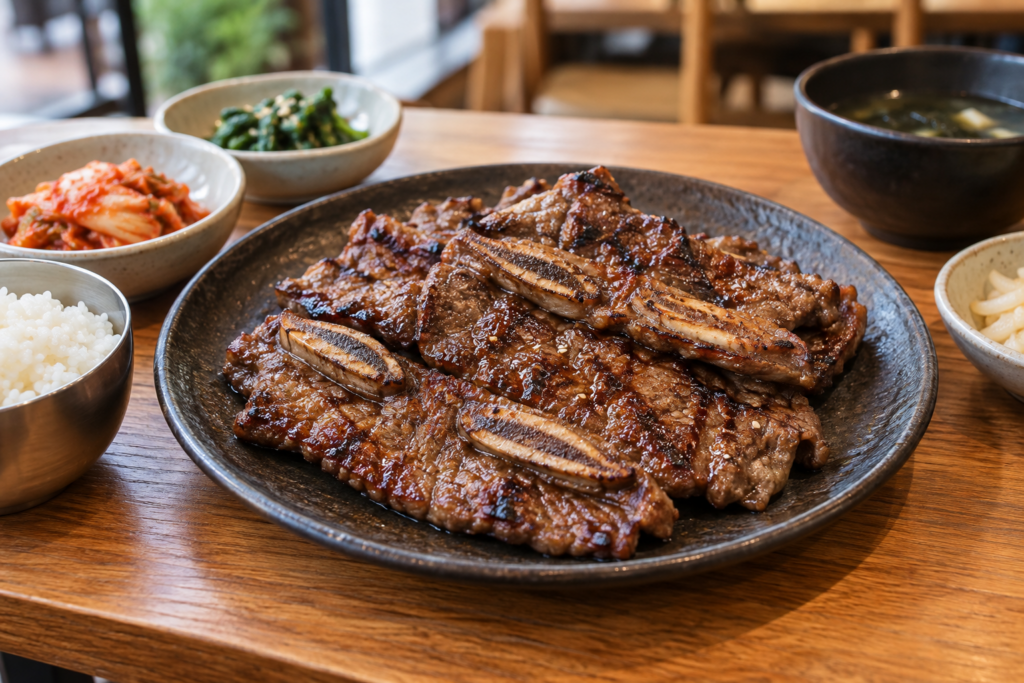
Galbi consists of marinated beef or pork ribs. The standard soy-sauce version is usually sweet and savory rather than spicy.
Check the menu carefully because some restaurants also offer a separate spicy version.
Japchae
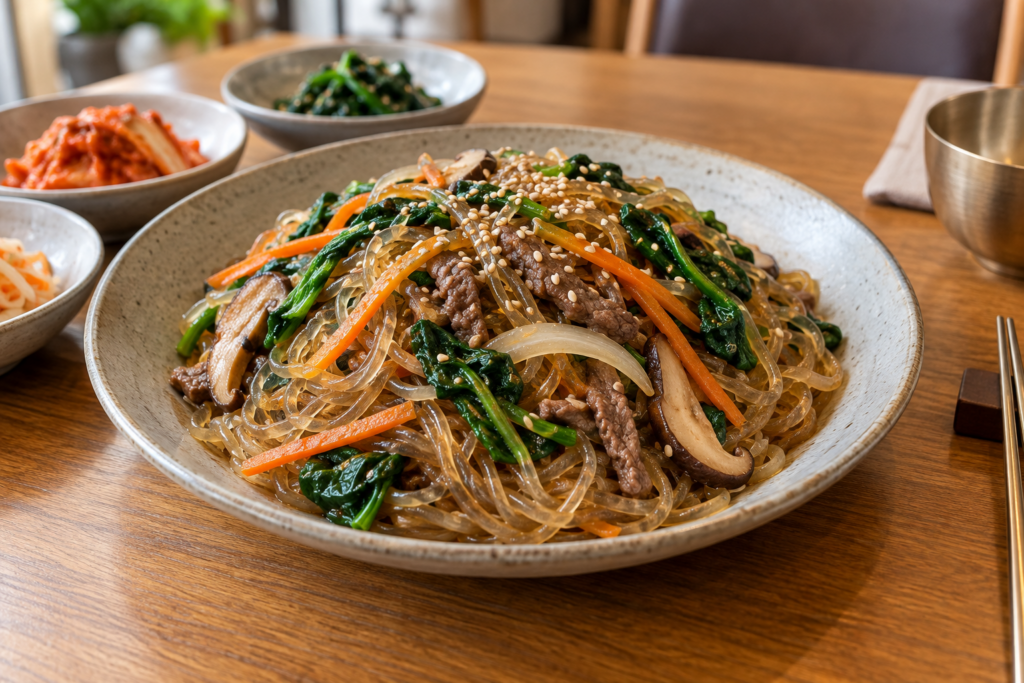
Japchae is made with glass noodles, vegetables, and a soy-based seasoning. It is generally mild with a slightly sweet and savory flavor.
Gimbap
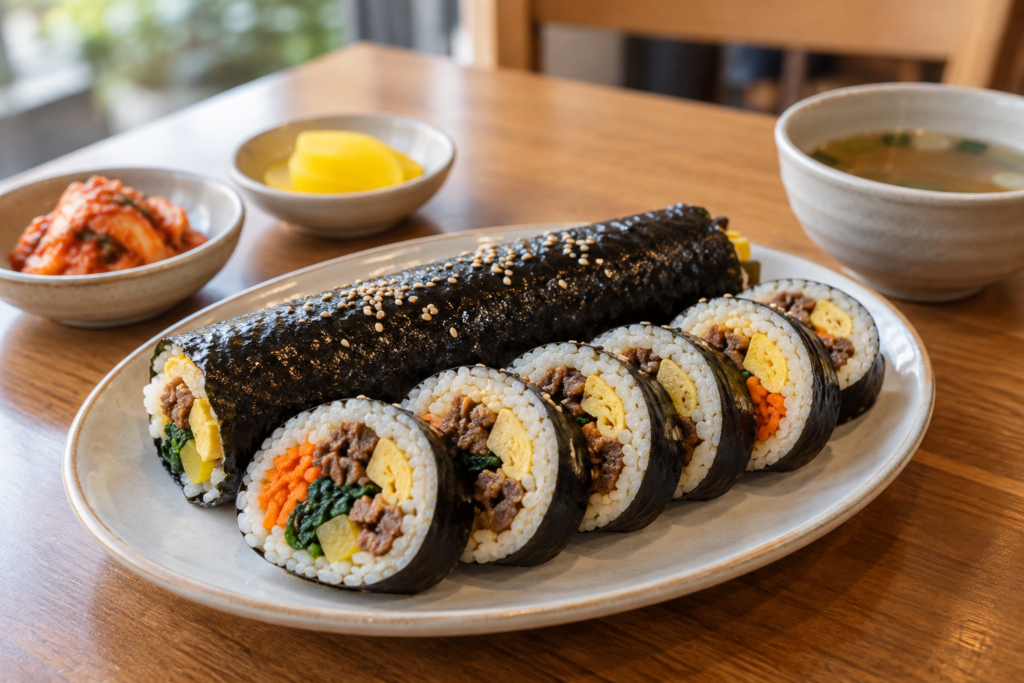
Gimbap consists of rice and various fillings rolled in dried seaweed. Common fillings may include vegetables, egg, ham, tuna, or beef.
Regular gimbap is usually not spicy, but varieties containing spicy tuna, kimchi, or chili peppers can be hot.
Samgyetang
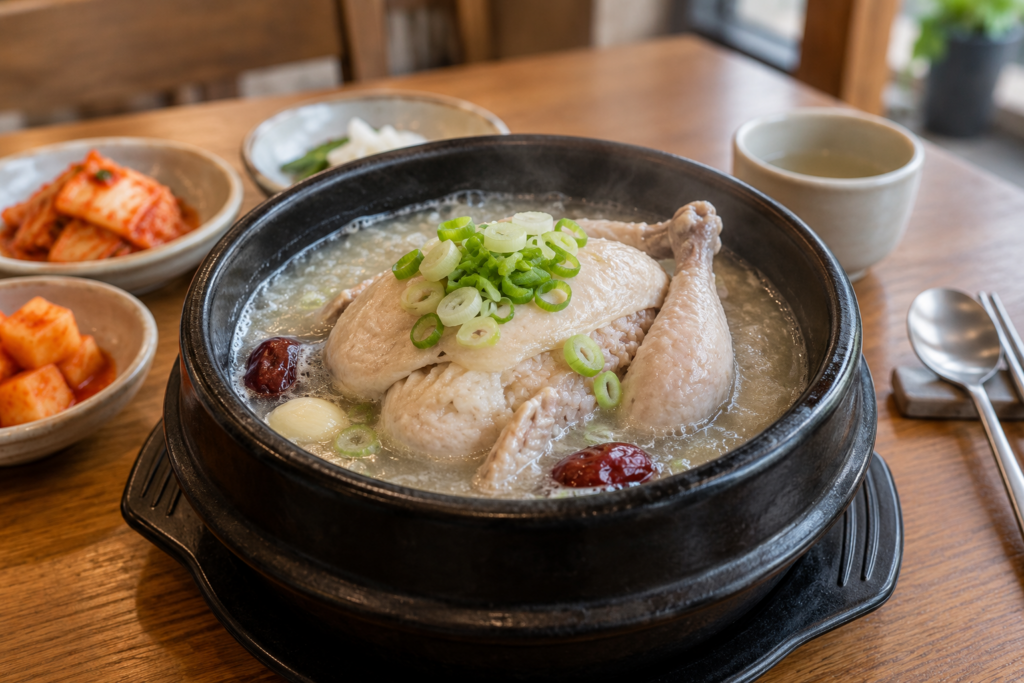
Samgyetang is a mild chicken soup traditionally prepared with a whole young chicken, rice, garlic, jujubes, and ginseng.
It has a gentle flavor, and diners usually add salt according to their preference.
Seolleongtang
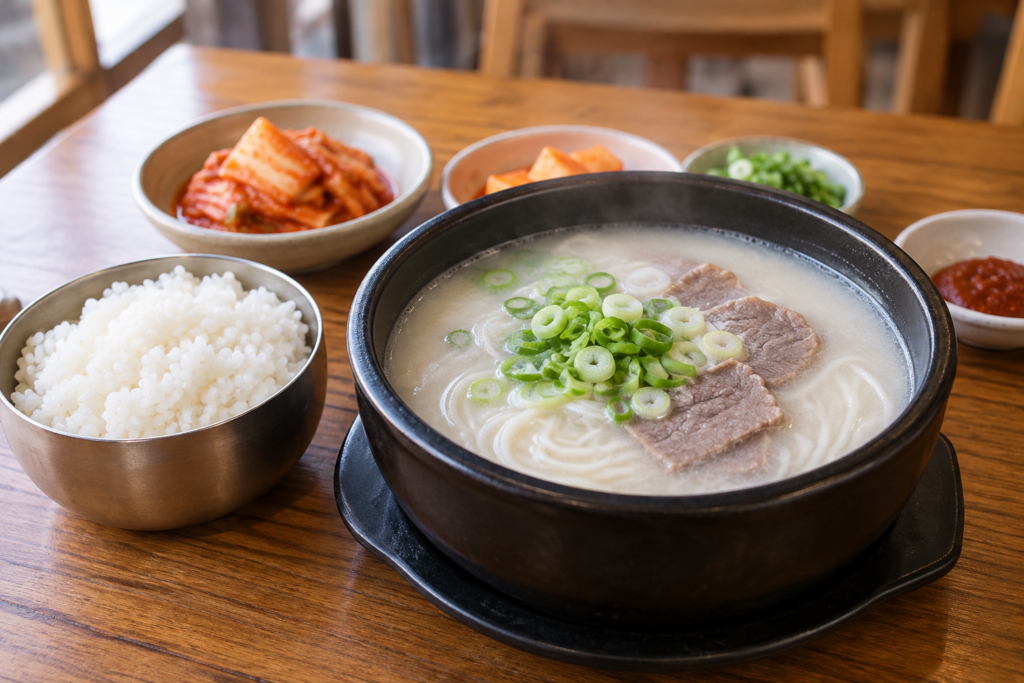
Seolleongtang is a milky-white soup made by simmering beef bones for many hours. The broth is generally very mild, and salt, green onions, and other seasonings may be added at the table.
Be careful with the kimchi or kkakdugi served on the side, as those may be spicy.
Mandu
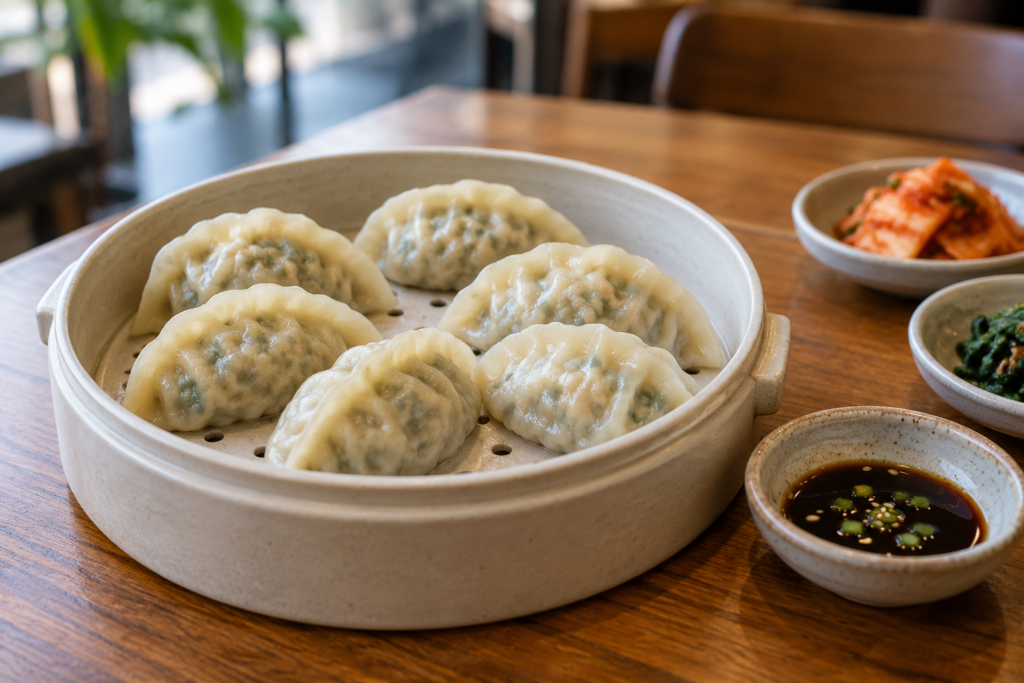
Mandu are Korean dumplings filled with meat, vegetables, or kimchi. Meat and vegetable mandu are usually mild, while kimchi mandu can be spicy.
Korean Barbecue
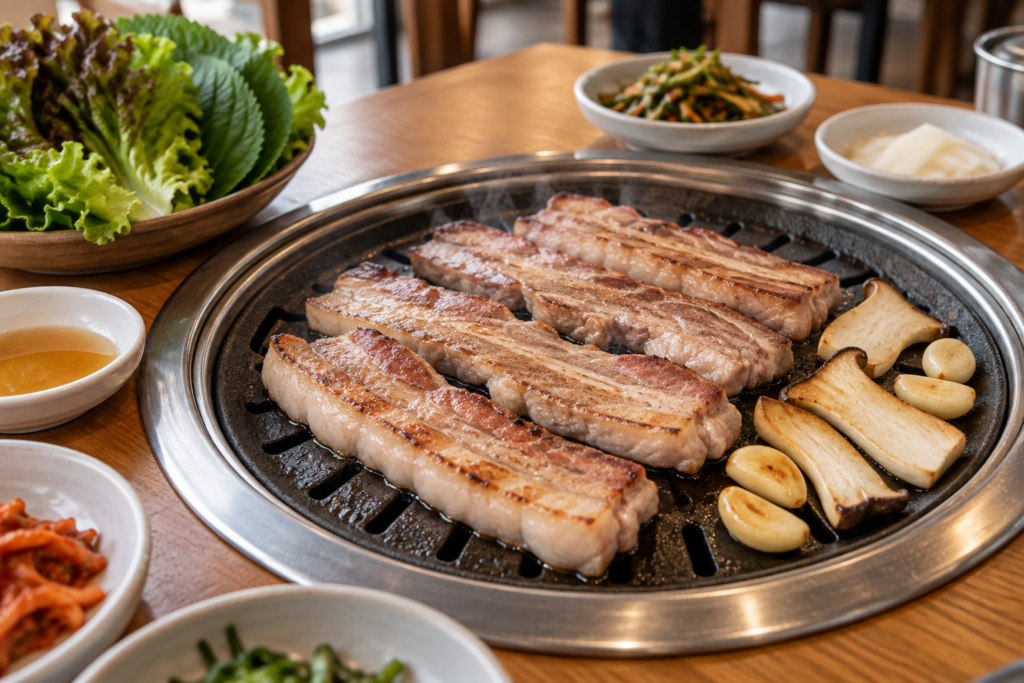
Unmarinated pork belly, known as samgyeopsal, and many soy-marinated barbecue dishes are not spicy.
Some dipping sauces and side dishes may contain chili, but you can choose how much of them to eat.
Jeon
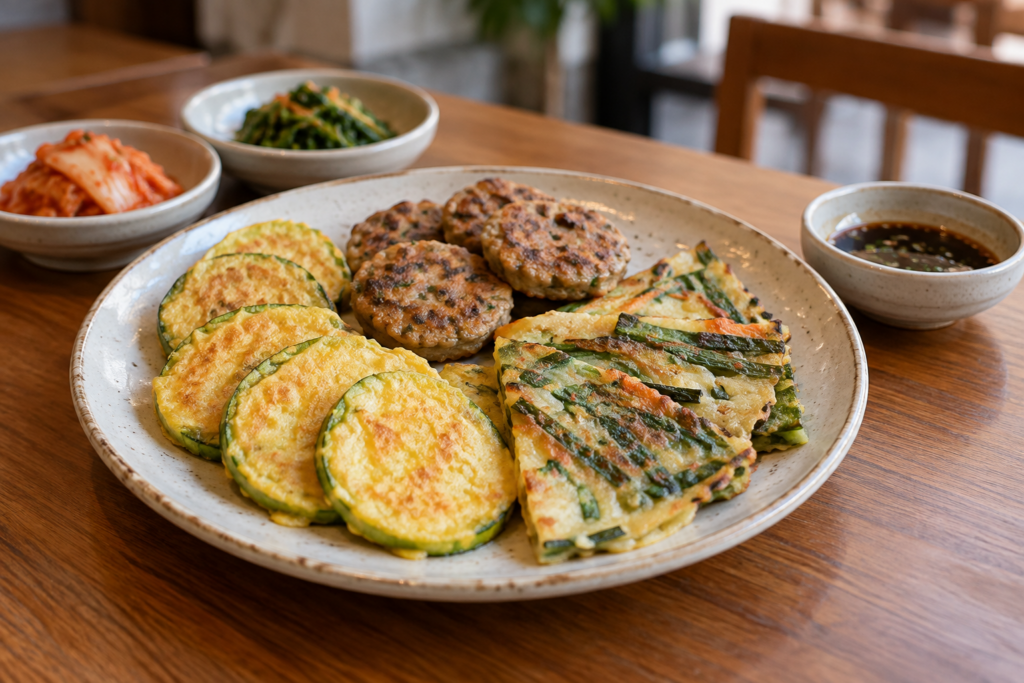
Jeon refers to savory Korean pancakes made with ingredients such as vegetables, seafood, meat, or mung beans. Many varieties are mild, although kimchi jeon
usually has some spice.
Gyeranjjim
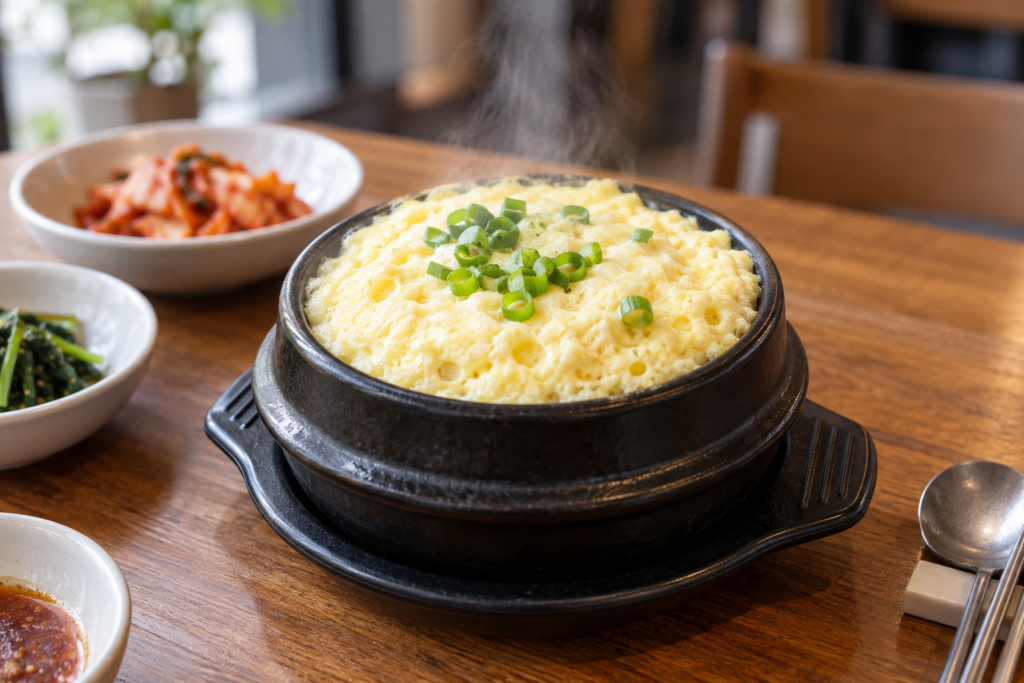
Gyeranjjim is a soft, steamed egg dish. It is mild and comforting and can be especially helpful when eating a meal that includes spicier dishes.
Is Kimchi Always Spicy?
Kimchi often contains red pepper flakes, but not every type is equally spicy.
The familiar napa cabbage kimchi can range from mild to very hot depending on the recipe. Its flavor also changes as it ferments, becoming more sour and complex over time.
Some varieties contain little or no red pepper. Baek kimchi, or white kimchi, is made without the typical red chili seasoning and is generally mild. Dongchimi, a refreshing radish water kimchi, is also usually less spicy.
However, even a mild-looking kimchi can contain chili peppers, so ask if you have an allergy or need to avoid spice completely.
Kimchi is one of many small dishes served with Korean meals. To learn more about these shared side dishes, read What Is Banchan? Are Side Dishes Free in Korea?
Does Red Always Mean Spicy?
Not necessarily, but a deep red sauce is a useful warning sign.
Some red Korean dishes are only mildly spicy because the sauce also contains sugar, soy sauce, or other seasonings. Others can be extremely hot.
At the same time, a dish that does not look red may contain fresh green chili peppers or a spicy dipping sauce.
If you are unsure, it is better to ask than to judge only by color.
How to Ask for Less Spicy Food
A useful Korean phrase is:
“An maepge haejuseyo.” (안 맵게 해주세요.)
This means, “Please make it not spicy.”
You can also say:
“Maeun geo mot meogeoyo.” (매운 거 못 먹어요.)
This means, “I cannot eat spicy food.”
Keep in mind that the restaurant may not always be able to change the spice level. Many sauces, broths, and prepared dishes are made in advance.
Instead of requesting a major change to a spicy dish, it may be easier to choose something that is naturally mild.
For more help with restaurant menus and ordering, see How to Order Food in Korea When You Don’t Speak Korean
Tips for Travelers Who Cannot Eat Spicy Food
Choose dishes that use a clear broth or soy-based sauce instead of a red chili sauce.
Look for words such as these on menus:
- Ganjang (간장): Soy sauce
- Sogeum (소금): Salt
- Baek (백): White, sometimes indicating a non-red version
- Maeun (매운): Spicy
- Bul (불): Means “fire,” but it does not always mean spicy. Bulgogi, for example, is usually mild, while buldak is typically very spicy.
- Cheongyang gochu (청양고추): A particularly hot Korean chili pepper
When possible, use a translation app or show the restaurant staff a written message explaining that you cannot eat spicy food.
Rice, steamed eggs, and mild side dishes may reduce the intensity of a spicy meal. However, drinking water does not always relieve chili heat effectively. Milk or another dairy product may help more, if available.
If you have a food allergy or medical condition, do not rely only on the word “not spicy.” Clearly explain the ingredient you must avoid, because a dish can contain chili without tasting extremely hot.
Final Thoughts
Korean food is not all spicy. While dishes such as tteokbokki, buldak, dakgalbi, and jjamppong can be very hot, many Korean favorites—including bulgogi, japchae, samgyetang, seolleongtang, gimbap, and grilled meat—are usually mild.
Do not let concerns about spice prevent you from exploring Korean cuisine. Check the menu, ask questions when needed, and begin with naturally mild dishes.
With a little preparation, you can enjoy a wide variety of Korean food regardless of your tolerance for chili.