
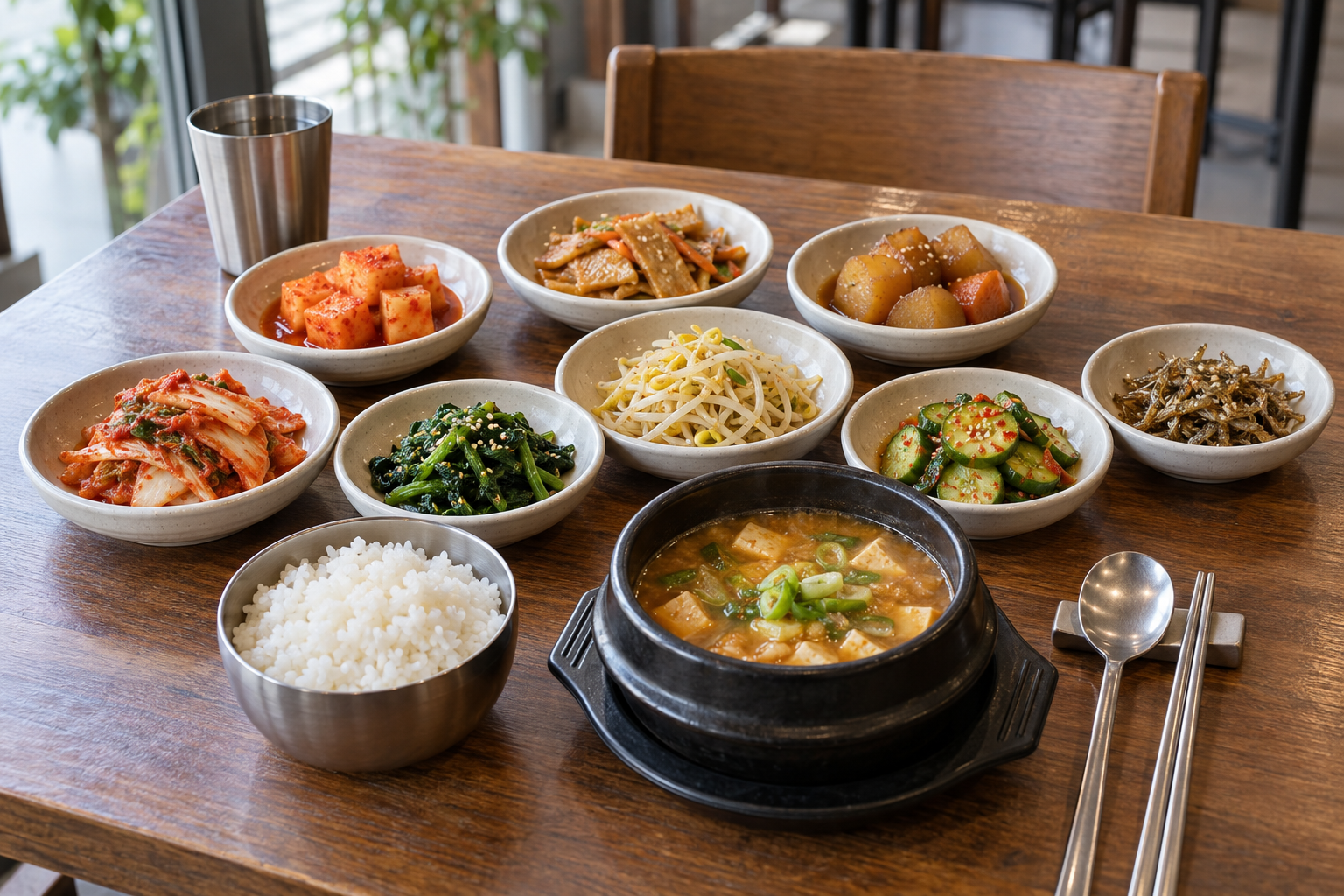
When you eat at a Korean restaurant, several small dishes may arrive at your table before or alongside your main meal. These dishes are called banchan (반찬), a central part of everyday Korean dining.
For first-time visitors, banchan can be a pleasant surprise. You may wonder whether you ordered these dishes, whether they cost extra, and whether you can ask for more.
At most traditional Korean restaurants, basic banchan is included with your meal at no additional charge. Refills are also commonly free, although there are some important exceptions.
What Is Banchan?
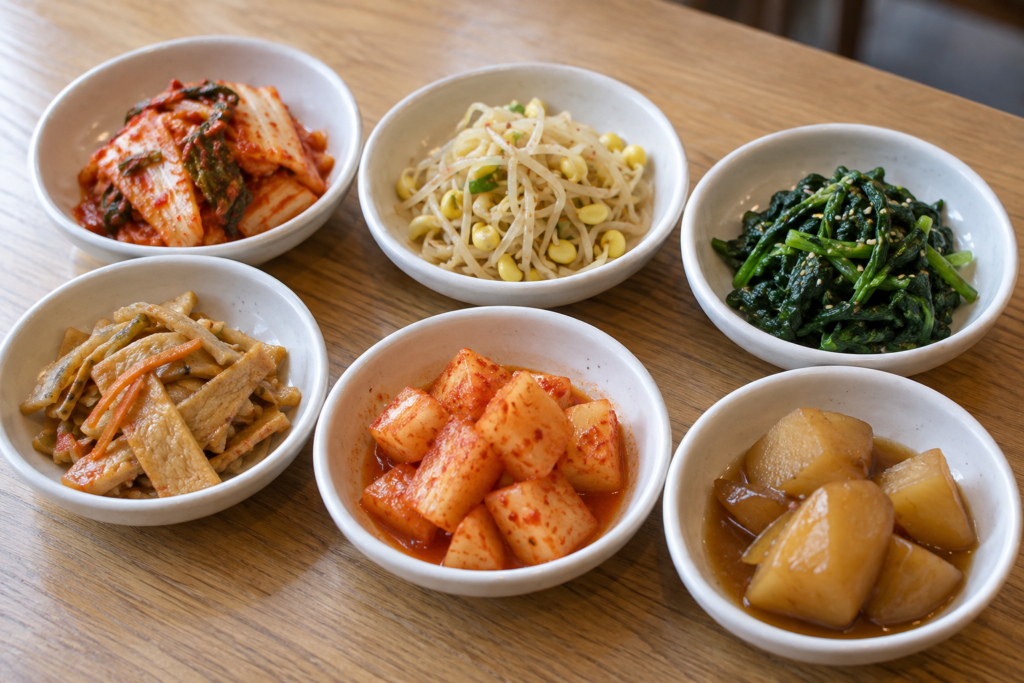
Banchan can include kimchi, seasoned vegetables, fish cake, and other small dishes.
Banchan refers to the small side dishes served with rice and a main dish in a Korean meal. Rather than being treated as separate appetizers, banchan is usually placed in the center of the table and shared by everyone.
The number and type of side dishes depend on the restaurant and the meal you order. A simple restaurant may serve two or three kinds, while a traditional Korean set-menu restaurant may provide a much larger selection.
Common types of banchan include:
- Kimchi
- Seasoned bean sprouts
- Stir-fried fish cakes
- Pickled radish
- Seasoned spinach
- Cucumber salad
- Braised potatoes
- Dried anchovies
- Seaweed
- Korean-style rolled omelet
The selection can also change depending on the season and the ingredients available that day.
Is Banchan Free in Korean Restaurants?
In most traditional Korean restaurants, basic banchan is included in the price of your meal. You do not normally receive a separate charge for dishes such as kimchi, seasoned vegetables, or pickled radish.
You also do not need to order banchan separately. The restaurant staff will usually bring it automatically after you place your order.
However, this does not mean that every small dish served in Korea is always free. Some restaurants offer special side dishes or additional menu items that may cost extra. Restaurant policies can vary, so check the menu or ask the staff if you are unsure.
Can You Get Free Banchan Refills?
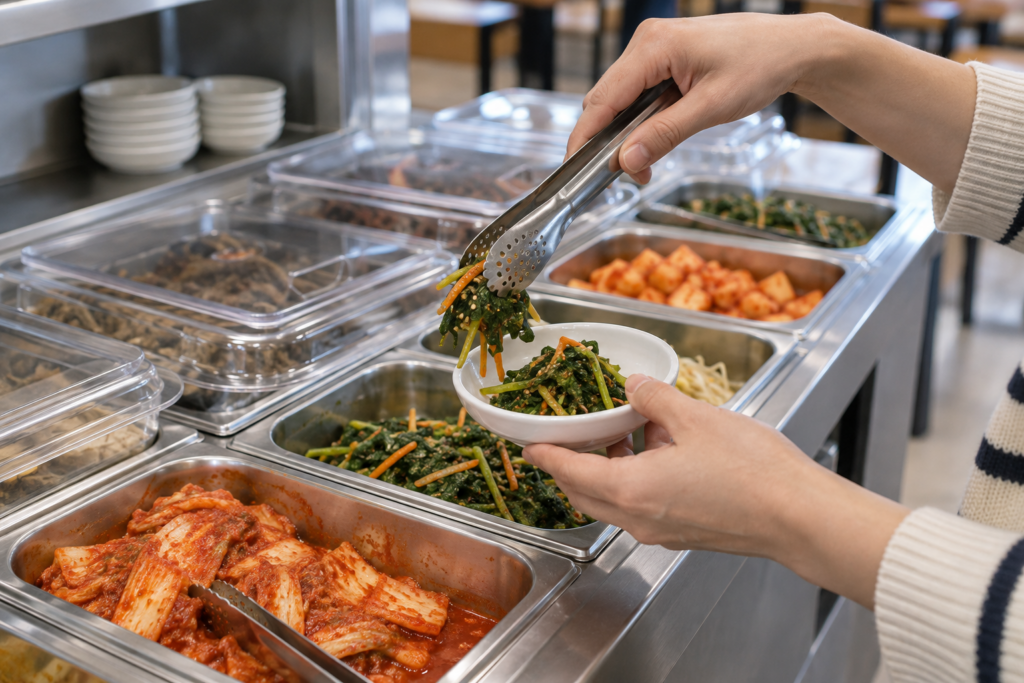
Basic banchan refills are usually free at Korean restaurants. If you finish a dish you particularly enjoy, you can politely ask for more.
Some restaurants have a self-service banchan station where customers can refill their own dishes. These stations are becoming more common in casual restaurants because they allow customers to take only what they want.
When requesting or taking a refill, it is best to take only as much as you expect to eat. Food waste is taken seriously, and some restaurants may display signs asking customers not to take excessive amounts.
A useful phrase is:
“Banchan jom deo juseyo.” (반찬 좀 더 주세요.)
This means, “Please give us some more side dishes.”
If you want more of a specific dish, you can point to the empty plate while making the request.
Are All Side Dishes Refillable?
Not necessarily. Simple banchan such as kimchi, bean sprouts, pickled radish, and seasoned vegetables are often refilled for free.
More expensive or substantial dishes may not be included in the free-refill policy. These can include:
- Grilled fish
- Marinated crab
- Korean pancakes
- Steamed eggs
- Meat dishes
- Premium seafood
- Special dishes included with a set menu
Some restaurants may refill these dishes, while others may charge for an additional serving. If the dish appears on the menu with its own price, it is probably not a standard complimentary banchan.
It is always fine to ask before ordering more.
Is Kimchi Always Served?
Kimchi is one of the most common banchan dishes, but you should not assume that every restaurant will serve the same kind.
A barbecue restaurant may serve green onion salad, pickled radish, or fresh kimchi. A soup restaurant may offer napa cabbage kimchi and kkakdugi, a cubed radish kimchi. Other restaurants may serve only one type of kimchi or focus on side dishes that complement their main menu.
The taste can also vary considerably. Some kimchi is fresh and crunchy, while other varieties are more fermented, sour, or spicy.
How Should You Eat Banchan?
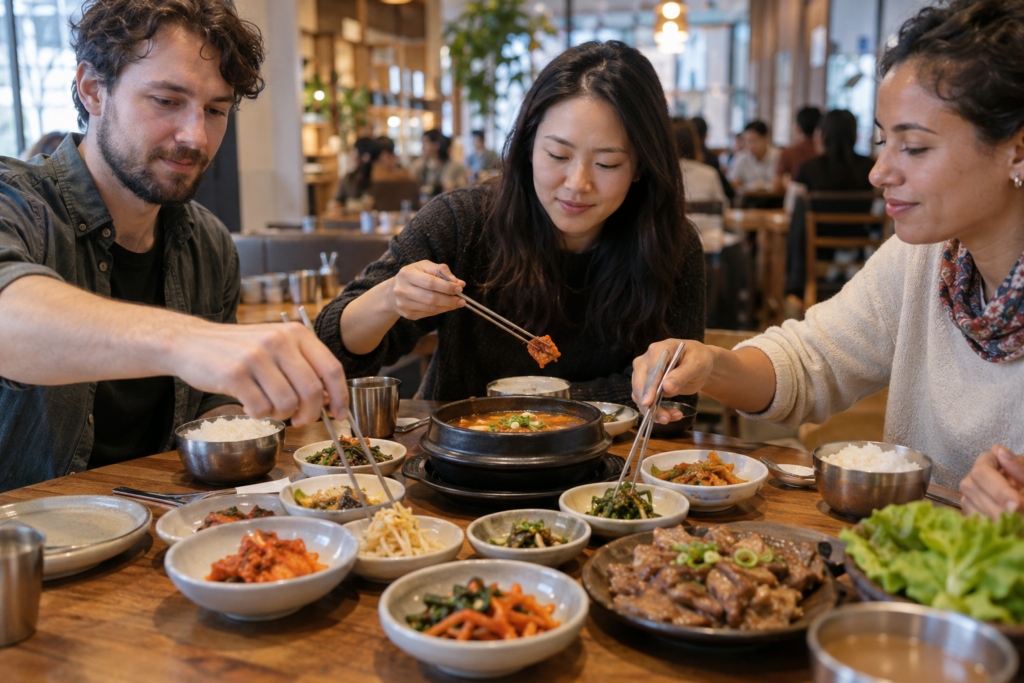
Banchan is generally shared by everyone at the table. You can take small portions as you eat your rice and main dish.
There is no required order for eating the side dishes. Try a little of each one and enjoy them throughout the meal. They are intended to add different flavors and textures to your food.
In many casual restaurants, diners use their own chopsticks to take banchan from the shared dishes. At more formal meals—or when serving utensils are provided—use the serving utensils instead.
If you are dining with other people, avoid moving an entire shared dish directly in front of yourself. Take a small amount and leave the dish where everyone can reach it.
Do You Have to Finish Every Side Dish?
No. You are not expected to finish every type of banchan placed on the table.
Some dishes may be unfamiliar, too spicy, or simply not to your taste. It is perfectly acceptable to leave them.
However, try a small amount before requesting a refill. Taking large portions and leaving them uneaten can create unnecessary food waste. If the restaurant has a self-service station, start with a little and return for more if needed.
Is Banchan the Same as an Appetizer?
Not exactly.
In many Western restaurants, an appetizer is ordered separately and eaten before the main course. Banchan is typically included with the meal and eaten together with rice, soup, meat, or another main dish.
Banchan is not simply a collection of complimentary appetizers. It is an essential part of the balance and variety of a traditional Korean meal.
What Travelers Should Know
Do not be surprised if food begins arriving that you did not specifically order. If it consists of small shared dishes, it is most likely banchan and is probably included with your meal.
You generally do not need to tip for the extra dishes or free refills. Tipping is still not customary at most Korean restaurants. For more information, see Do You Tip in Korea?
If ordering at a Korean restaurant feels intimidating, our guide on How to Order Food in Korea When You Don’t Speak Korean explains menus, ordering systems, payment, and useful dining tips.
Final Thoughts
Banchan is one of the most distinctive and enjoyable parts of eating in Korea. These small shared dishes let you experience different flavors, ingredients, and cooking styles in a single meal.
At most traditional Korean restaurants, basic banchan and reasonable refills are included in the meal price. Just remember that premium dishes may be treated differently and that policies can vary by restaurant.
Try a little of everything, ask politely if you would like more, and take only what you can finish. Understanding this simple dining custom will help you feel more comfortable and enjoy Korean meals with confidence.