
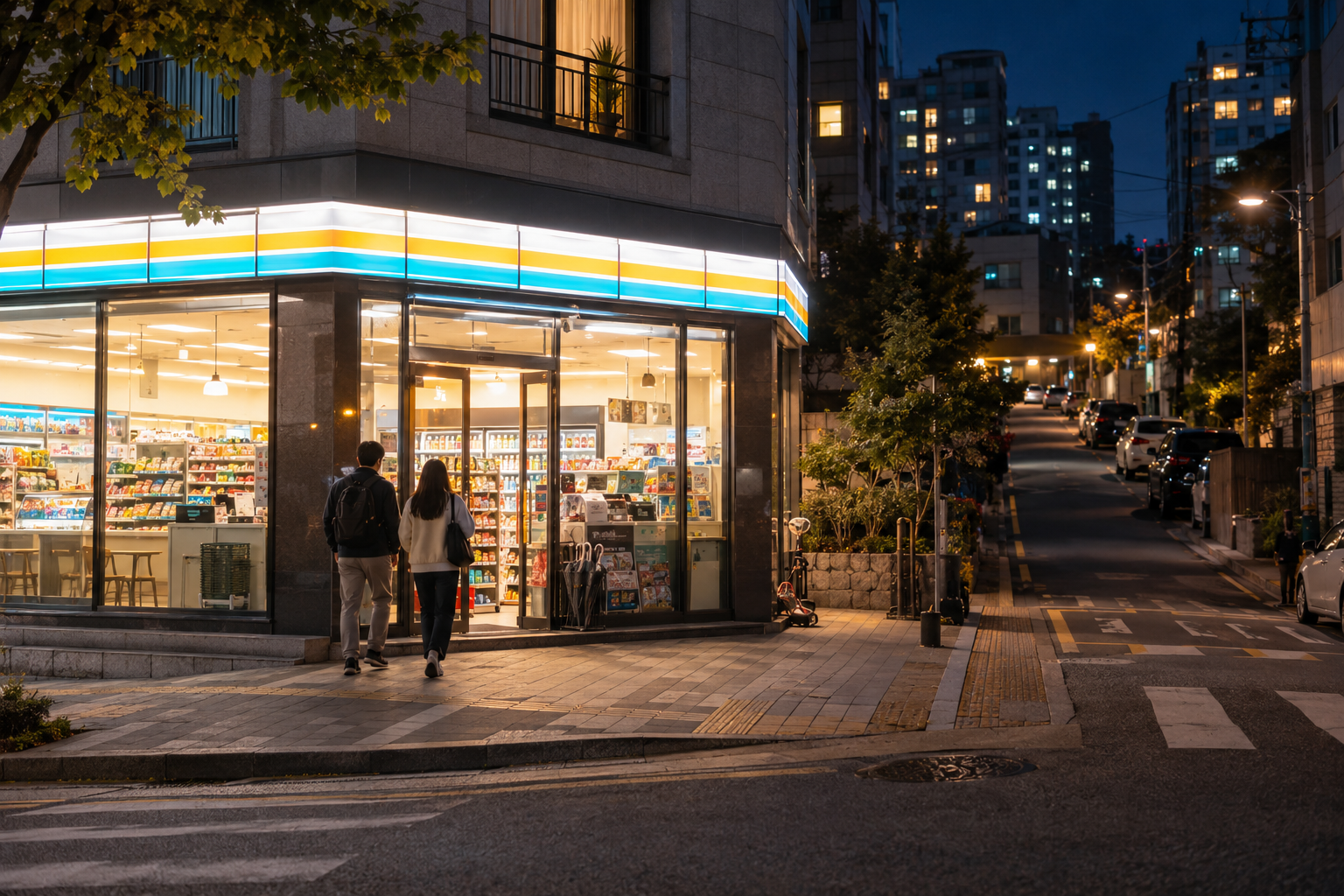
Walk through a residential neighborhood in Korea late at night, and you may notice a brightly lit shop selling ice cream, snacks, ramyun, flowers, or even pet supplies—with no employee behind the counter.
These businesses are called muin gage (무인 가게) in Korean. They are a distinctive type of self-service store where customers select their own products and pay at a kiosk, usually without an employee regularly stationed inside.
Although self-service businesses exist in many countries, Korea has developed an especially wide variety of them. They can be found not only in busy shopping districts but also near apartment buildings, schools, universities, and residential neighborhoods.
For travelers, visiting one can be an interesting glimpse into everyday life in Korea. Here is what you should know before stepping inside.
What Is a Self-Service Store in Korea?
A Korean self-service store typically operates without an employee present at all times.
Customers enter, select the products they want, scan them at a checkout kiosk, and pay on their own. Employees may visit periodically to restock products, clean the store, maintain equipment, and check security footage.
Most locations use CCTV and remote monitoring. Instructions and contact information are also usually displayed near the entrance or checkout area in case customers need assistance.
Why Are They So Popular?
Several factors have contributed to the growth of self-service stores in Korea.
Late-Night Convenience
Many locations stay open late, and some operate 24 hours a day. This makes them especially convenient for students, late-night workers, and nearby residents who want a quick snack or other basic items after regular businesses have closed.
Lower Operating Costs
Operating without an employee present at all times can reduce labor costs. It can also make it possible for a small neighborhood business to remain open during late-night hours.
These stores still require regular management. Owners or employees must restock merchandise, clean the space, maintain equipment, and respond when problems occur.
Familiarity With Kiosks
Self-ordering and self-checkout kiosks are already common throughout Korea. Travelers will see them in restaurants, cafés, movie theaters, train stations, and fast-food restaurants.
Because Korean consumers are accustomed to using this technology, shopping without assistance feels familiar to many customers.
Trust Combined With Technology
These businesses depend partly on customers paying honestly and following the rules. However, they do not rely on trust alone.
Most locations use security cameras and remote monitoring to discourage theft and identify problems. They are still managed businesses—the management simply happens without an employee standing behind the counter at all times.
Types of Self-Service Stores in Korea
The variety of self-service businesses is one of the most interesting parts of this trend.
Ramyun Shops
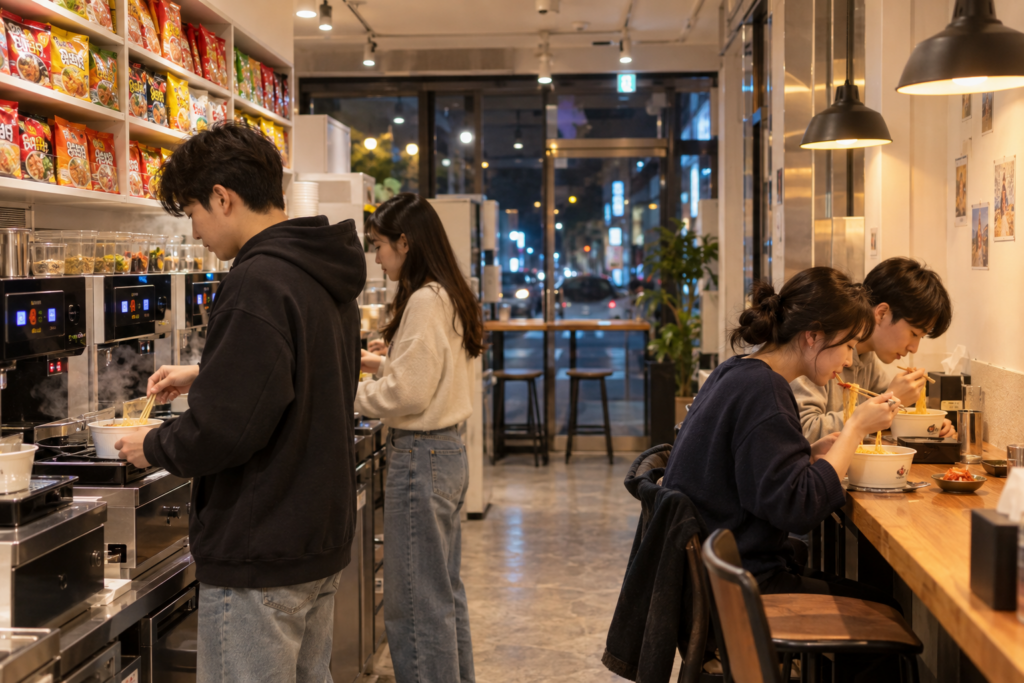
A self-service ramyun (라면) shop can be a fun and inexpensive experience for travelers.
Ramyun is commonly used in English to refer to Korean instant noodles. Customers choose a package of ramyun, pay at the kiosk, and prepare it using a special cooking machine.
Depending on the shop, additional toppings such as eggs, cheese, rice cakes, green onions, or sausages may be available.
Bowls, chopsticks, water, and seating are usually provided. After eating, customers are expected to clean their table and separate their trash properly.
Ice Cream and Snack Stores
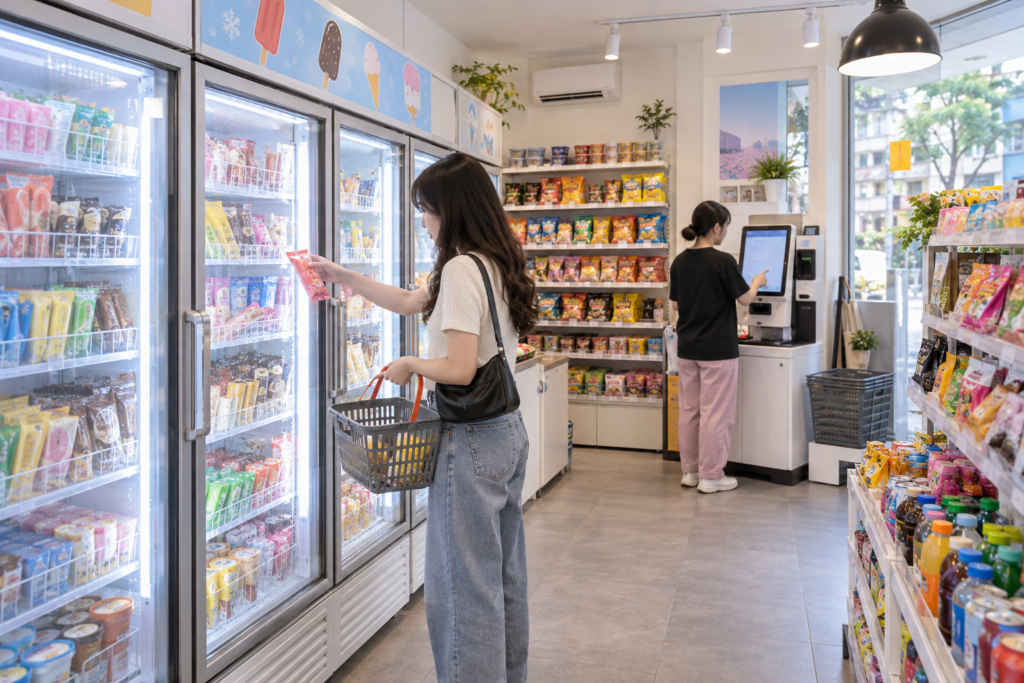
Self-service ice cream shops are commonly found in residential neighborhoods. They usually carry individually packaged ice cream, candy, chips, drinks, and other inexpensive snacks.
Customers select what they want, scan each barcode, and pay at the checkout kiosk.
Cafés
Some self-service cafés use automated coffee machines rather than baristas. Customers choose a drink on a touchscreen, pay, and collect the finished beverage from the machine.
The menu may be simpler than at a regular café, but prices are often lower. Some locations remain open throughout the night.
Meal-Kit Stores
Meal-kit shops sell packaged ingredients that customers can take home and cook. Products may include Korean stews, noodles, meat dishes, and side dishes.
These stores mainly serve local residents, but they can also be useful for travelers staying in accommodations with a kitchen.
Self-Photo Studios
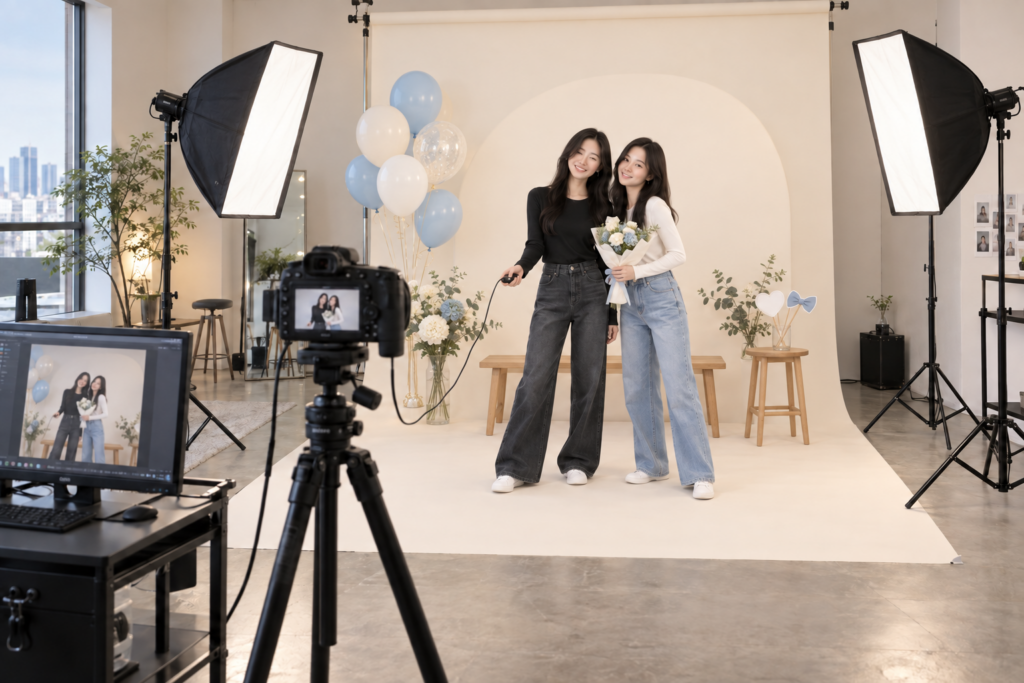
Korea’s self-photo studios and photo booths have become popular with friends, couples, and travelers.
Customers select a background or frame, use a timer or remote control to take pictures, and receive printed photo strips. Some studios also provide mirrors, dressing areas, accessories, and themed props.
A visit to a self-photo studio can be an easy and inexpensive way to create a souvenir from your trip.
Laundromats
Many Korean laundromats operate through self-service machines, and some remain open 24 hours a day.
Depending on the location, the machines may accept coins, bills, cards, or a store-specific payment system. Instructions may be available only in Korean, so a translation app can be helpful.
Other Self-Service Businesses
Depending on the neighborhood, you may also find shops selling:
- Pet food and supplies
- Flowers
- Fresh produce
- Frozen meat
- Desserts
- Toys and stationery
- Household products
- Vintage clothing
New variations continue to appear as business owners experiment with the self-service model.
How Do You Use One?
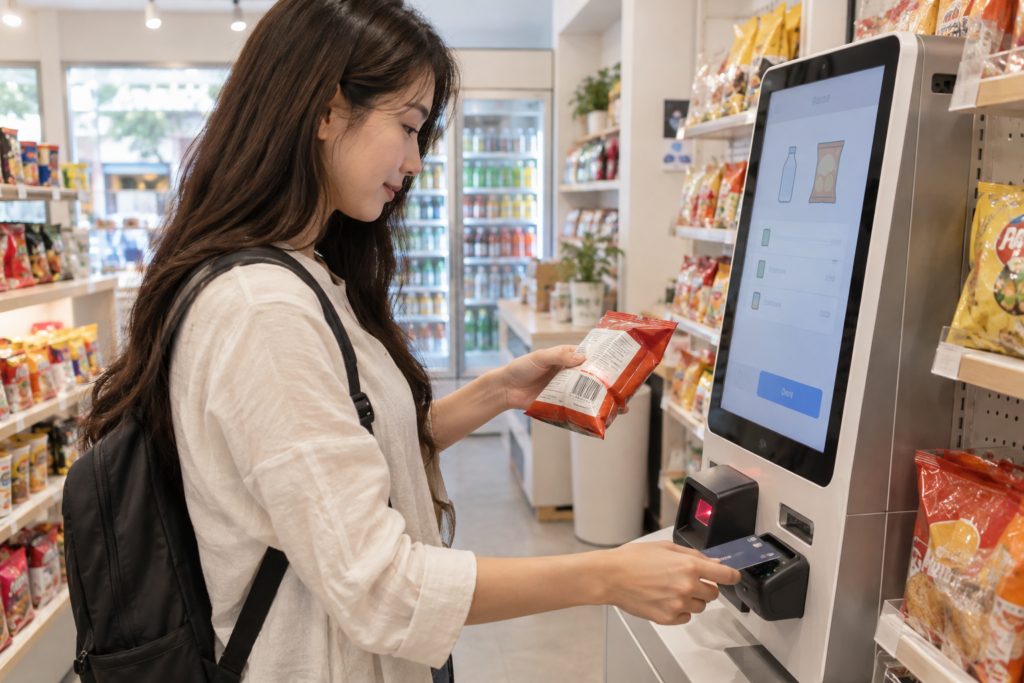
The process is usually straightforward:
- Enter the store and select the products you want.
- Take the items to the checkout kiosk.
- Scan the barcode on each product.
- Confirm that every item appears correctly on the screen.
- Select your payment method.
- Complete the payment and take your receipt if needed.
- Return unwanted products to their proper places.
- Clean your table and dispose of trash properly if you eat inside.
Some locations may require customers to scan a payment card or follow special instructions before entering.
How to Use a Self-Service Ramyun Shop
The exact process varies by location, but it usually works like this:
- Choose a package of instant ramyun.
- Select any additional toppings.
- Scan and pay for everything at the kiosk.
- Place the ramyun in the bowl provided by the shop.
- Add the soup powder and other ingredients.
- Place the bowl under the cooking machine.
- Select the appropriate setting and allow the machine to add water and cook the noodles.
- Take the finished ramyun to the seating area.
- Clean your table and separate your trash when finished.
Illustrated instructions are often posted near the cooking machines. If the directions are available only in Korean, use a translation app on your phone.
Be careful when removing or carrying the bowl because the water and container can be extremely hot.
Can You Use a Foreign Credit Card?
Many of these businesses rely heavily on card payments. However, a foreign-issued credit or debit card may not work with every Korean kiosk.
Visa and Mastercard are widely accepted in Korea, but acceptance can depend on the payment terminal and the individual card. Some machines may require a Korean-issued card or a local mobile payment service.
Carry more than one payment method whenever possible. A small amount of cash can also be helpful, although some locations do not accept cash.
Can You Buy Alcohol or Cigarettes?
Buying age-restricted products can be more complicated because the customer’s age must be verified.
Some stores use identification scanners, card verification, or remote assistance. These systems may not recognize a foreign passport or foreign-issued card.
Do not assume that you can purchase alcohol or cigarettes just because no employee is present. If the machine cannot verify your age, visit a staffed convenience store instead.
Are They All Open 24 Hours?
No. Many self-service businesses operate 24 hours, but others have set opening and closing times.
A store may also close temporarily for cleaning, restocking, maintenance, or security reasons.
Check the hours posted at the entrance or search for the business on Naver Map or KakaoMap before making a special trip.
For more information about shopping late at night, read our guide: Are Convenience Stores Open 24 Hours in Korea?
Are Self-Service Stores Safe?
Korea is generally considered a safe destination, and these businesses are commonly used during both the day and night.
Most locations are brightly lit and monitored by CCTV. Some also provide an emergency contact number, security button, or remote assistance system.
However, travelers should still take normal precautions, especially late at night. Choose a well-lit location, stay aware of your surroundings, keep your belongings with you, and leave if anything makes you uncomfortable.
Important Etiquette
Even when no employee is present, customers are expected to behave responsibly.
- Scan and pay for every item.
- Do not open food or drinks before paying.
- Return unwanted products to the correct place.
- Do not damage or misuse the equipment.
- Keep noise down in residential neighborhoods.
- Clean your table after eating.
- Separate food waste, recyclables, and general trash when instructed.
- Use the posted contact number if a machine malfunctions.
CCTV is commonly used, so a store without an employee present should not be considered unmonitored.
What Travelers Should Remember
Self-service stores offer a small but memorable glimpse into everyday life in Korea.
English instructions may not always be available, and foreign credit cards may occasionally be rejected. Certain locations may also require a Korean phone number, locally issued card, or compatible form of identification.
A translation app and a backup payment method can make the experience easier.
Final Thoughts
From late-night ramyun shops and ice cream stores to cafés, laundromats, and photo booths, Korea’s self-service businesses offer a level of variety and convenience that many visitors may find surprising.
They are not completely without management. Owners and employees still restock products, clean the stores, maintain equipment, monitor security cameras, and provide assistance when necessary. The main difference is that customers complete most of the experience on their own.
If you come across one during your trip, take a look inside. Whether you cook a bowl of ramyun, buy a midnight snack, or take photos with friends, it can be a simple and interesting way to experience a more local side of Korea.