
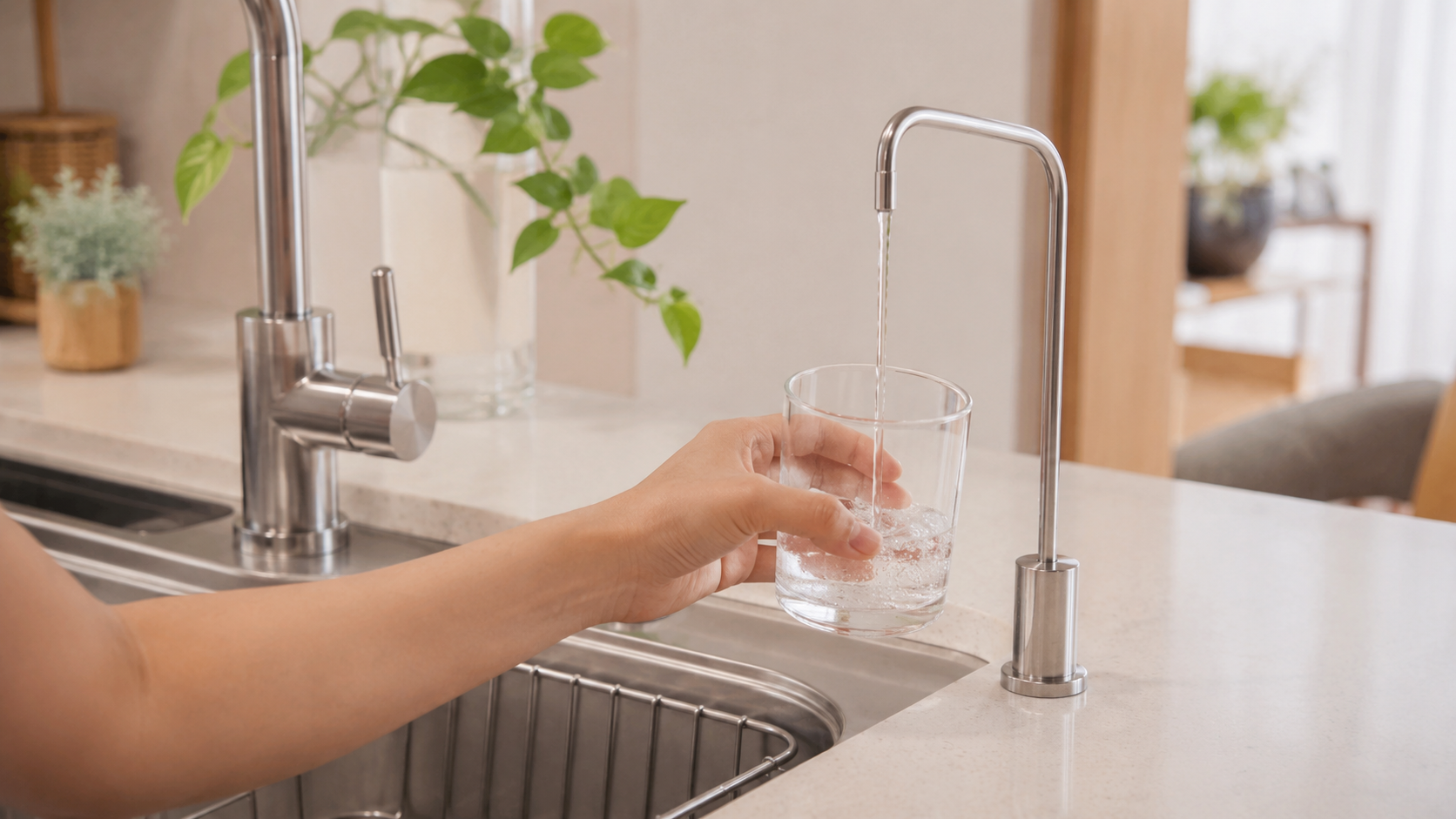
If you are visiting South Korea, you may wonder whether it is safe to drink water directly from the tap.
The short answer is yes—tap water in South Korea is generally safe to drink. Public water supplies are treated and tested according to national drinking-water standards.
However, many Koreans still prefer filtered or bottled water. Korea also has traditional public spring-water sites called yaksuteo, where people have long gone to drink water or fill containers to take home.
Here is what travelers should know about drinking water in Korea.
Is Tap Water Safe in South Korea?
Tap water in South Korea is treated and regularly monitored for safety. Major cities operate modern water-treatment systems, and local governments conduct water-quality testing.
In Seoul, the city’s tap water is called Arisu. The Seoul Metropolitan Government promotes Arisu as safe drinking water and offers free household water-quality testing to residents.
However, the quality of the public water supply is only part of the story. The condition of a building’s internal pipes or water-storage tank can also affect the water that reaches the faucet.
This may be more of a concern in an older building than in a newer hotel or apartment.
Seoul Strengthens Arisu Water Quality Tests
Why Don’t Many Koreans Drink Straight From the Tap?
Although the public water supply is considered safe, drinking directly from the faucet is not especially common in Korea.
Many Korean households use:
- A countertop or built-in water purifier
- A refrigerator with a filtered-water dispenser
- Bottled water
- Boiled tap water
Some people are concerned about older pipes or building water tanks. Others simply prefer the taste of filtered water and want to avoid the slight chlorine smell that tap water may have.
Therefore, seeing Koreans use water purifiers does not necessarily mean Korea’s tap water is unsafe. It is often a matter of taste, habit, and confidence in the plumbing inside a particular building.
What Is a Yaksuteo in Korea?
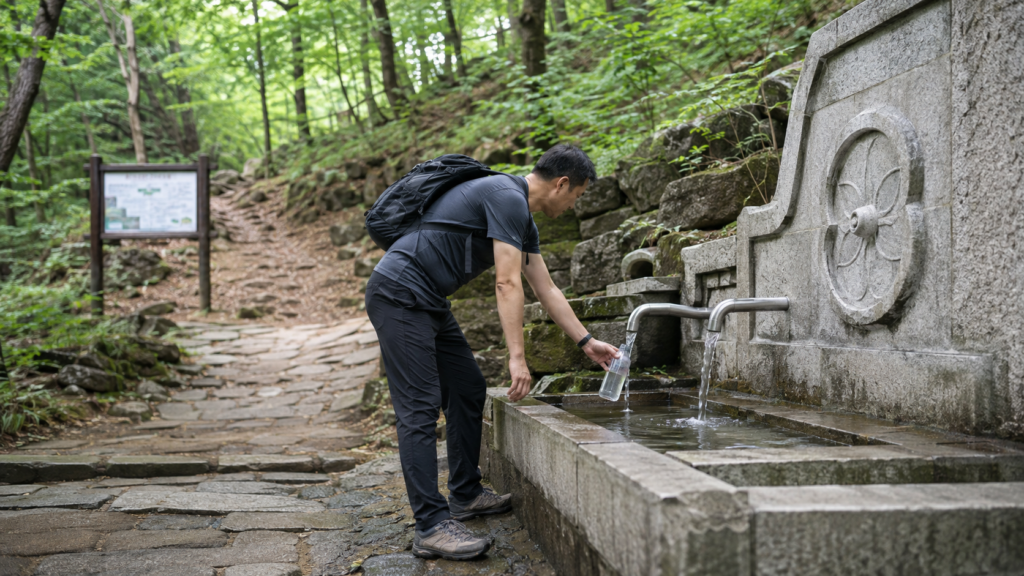
Korea also has traditional public spring-water sites called yaksuteo (약수터). They are often found near mountains, hiking trails, temples, and neighborhood parks.
The word yaksu is traditionally associated with “medicinal water.” However, the name does not mean that the water has scientifically proven health benefits.
In the past, visiting a neighborhood yaksuteo was part of everyday life for many Korean families. People often visited early in the morning as part of a walk or hike. Some drank the water at the spring, while others filled large containers and carried the water home for drinking or cooking.
You may still see people collecting water at a yaksuteo today, although the practice is not as common as it once was.
Is Water From a Yaksuteo Safe?
Spring water is not automatically safe just because it comes from a mountain.
Rain, wildlife, nearby construction, and other environmental changes can introduce bacteria or contaminants into the water. Water quality may also change depending on the season, especially after heavy rain.
Government-managed yaksuteo are tested periodically, and the latest inspection result is usually posted near the spring. Look for these Korean words:
- 적합 (jeokhap): Suitable for drinking
- 부적합 (bujeokhap): Not suitable for drinking
- 음용 금지 (eumyong geumji): Do not drink
Always check the posted test result and inspection date before drinking. Do not drink from a random or unmarked mountain spring.
Even if local hikers are drinking the water, that does not guarantee that it has recently passed a safety inspection.
What Should You Do at a Hotel or Airbnb?
Many Korean hotels provide complimentary bottled water in the room. Some hotels also have filtered-water dispensers in the hallway or lobby.
If bottled or filtered water is available, that will usually be the easiest option.
At an Airbnb or guesthouse, ask the host whether the kitchen faucet water is appropriate for drinking. The host may tell you to use a water purifier, bottled water, or a particular faucet.
If the building appears old, the water looks cloudy or discolored, or it has an unusual smell, do not drink it until you have asked the hotel staff or host.
Is Restaurant Water Safe?
Yes. The drinking water provided at Korean restaurants is generally safe.
Restaurants commonly serve filtered water from a water purifier. In some casual restaurants, cups and a self-service water dispenser may be located near the counter.
Water is usually provided free of charge, so you normally do not need to order bottled water with your meal.
Where Can You Buy Bottled Water?
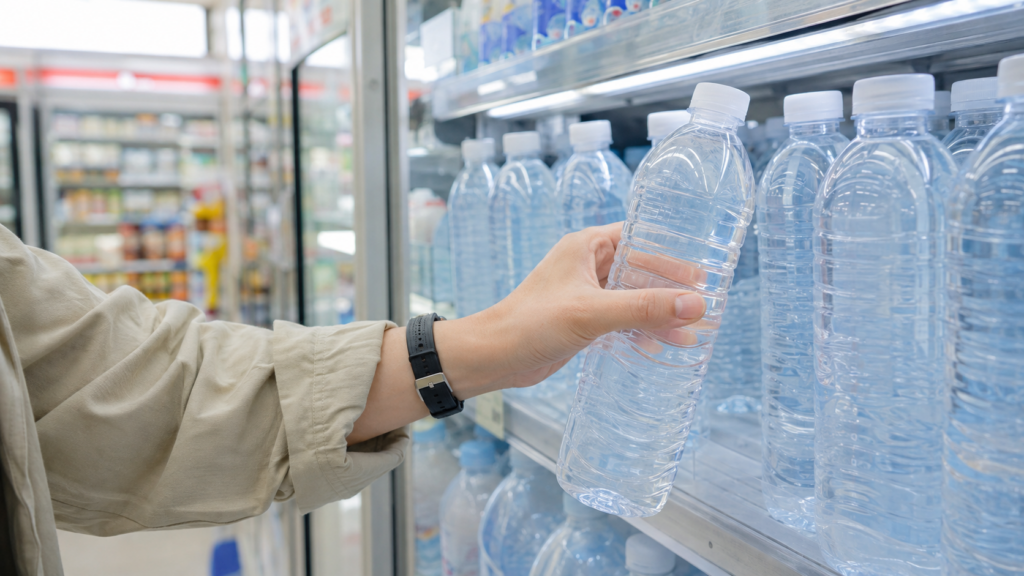
Bottled water is easy to find throughout Korea. You can buy it at:
- Convenience stores such as CU, GS25, 7-Eleven, and emart24
- Supermarkets
- Train and bus stations
- Vending machines
- Hotels and tourist attractions
Convenience stores sell both individual bottles and larger multi-bottle packages. If you plan to walk around all day, picking up a bottle before leaving your hotel is an easy option.
Can You Use Tap Water for Brushing Your Teeth?
Yes. Travelers can generally use Korean tap water for brushing their teeth, washing produce, showering, and making coffee or tea.
Boiling tap water is also fine, although boiling does not solve every problem that could be caused by rusty or poorly maintained building pipes.
If the water looks cloudy or discolored, smells unusual, or comes from an unknown outdoor source, use bottled or properly filtered water instead.
The Bottom Line
Tap water in South Korea is treated and generally safe to drink. However, many Koreans prefer filtered or bottled water because of taste, habit, or concerns about the plumbing inside older buildings.
For most travelers, the simplest approach is:
- Use the bottled or filtered water provided by your accommodation.
- Drink the water served at restaurants without worrying.
- If you are staying in an older building, ask your host whether the tap water is suitable for drinking or whether you should use the property’s water purifier.
- Buy bottled water at a convenience store when you are out sightseeing.
- Never drink from an unmarked mountain spring.
- Check the latest water-quality notice before drinking at a yaksuteo.
You do not need to be overly concerned about drinking water in Korea. Clean drinking water is widely available, and finding bottled or filtered water is easy almost everywhere you go.
Related Guide: First Time in Korea Guide